Key Takeaway
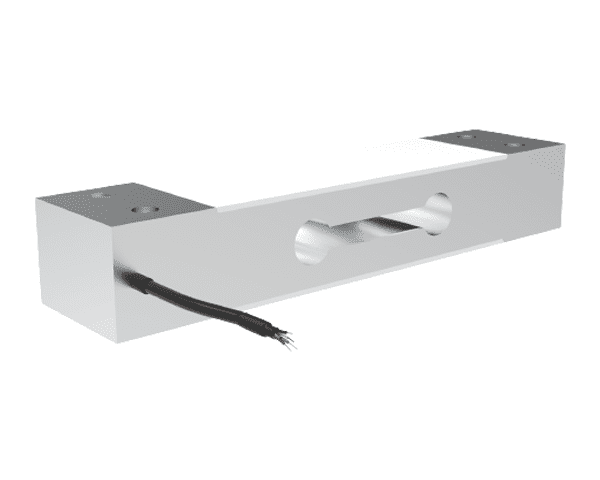
• GALOCE offers 6 load cell models for vending machines — 3 analog (GPB100R / GPB158 / GPB200R) + 3 digital RS485 (GPB100D / GPB158D / GPB200D) — covering 3 kg to 600 kg shelves
• Digital GPB-D series enables multi-shelf bus wiring, factory-calibrated output, and remote diagnostics — ideal for large-scale vending networks
• Weight sensing + camera vision dual-verification reduces payment failures and theft to near zero
• Single-point design: one sensor per shelf, no junction box needed, ≤2 g resolution on small shelves
What Are Unmanned Vending Machines?
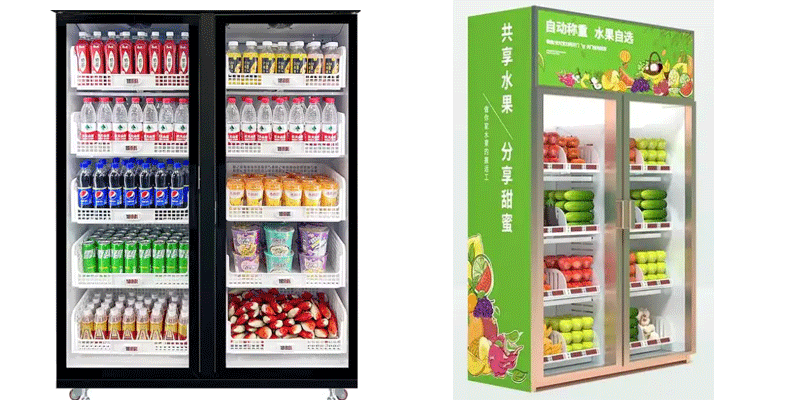
Unmanned vending machines — also known as intelligent or automatic vending machines — are 24-hour self-service retail systems powered by Internet of Things (IoT) technology. Unlike traditional coil-drop or elevator-type machines that dispense one product at a time, the latest generation features open-door grab-and-go design: customers scan a QR code, open the glass door, pick up items directly from the shelves, and the door auto-locks after closing. Payment is deducted automatically based on what was actually taken.
These machines dispense a wide variety of products — beverages, snacks, instant noodles, fresh vegetables, fruits, ready meals, and even electronics — and are commonly deployed in residential communities, airports, train stations, cinemas, hospitals, office buildings, and university campuses.
|
Location
|
Typical Products
|
Shelf Capacity
|
Recommended Sensor
|
|
Office Building
|
Snacks, drinks, instant noodles
|
3–30 kg/shelf
|
GPB100R / GPB100D
|
|
Residential Community
|
Vegetables, fruits, dairy
|
30–100 kg/shelf
|
GPB100R / GPB100D
|
|
Airport / Station
|
Beverages, travel goods, electronics
|
60–300 kg/shelf
|
GPB158 / GPB158D
|
|
Warehouse-Style Store
|
Bulk items, multi-pack goods
|
100–600 kg/shelf
|
GPB200R / GPB200D
|
How Do Unmanned Vending Machines Operate?
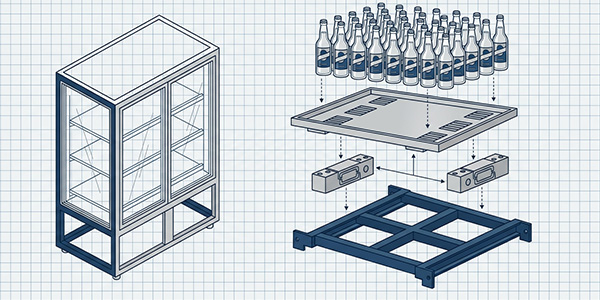
The design of modern unmanned vending machines resembles traditional vertical glass-door refrigerated cabinets but adds intelligent layers: QR code authentication, automatic electromagnetic locks, camera vision, and — critically — weight sensing on every shelf. The operating flow is as follows:
|
Step
|
Action
|
Technology Involved
|
|
1
|
Customer scans QR code with smartphone
|
WeChat/Alipay mini-program → identity binding → pre-authorization
|
|
2
|
Door unlocks; system records baseline weight per shelf
|
Load cell → ADC → MCU stores tare weight snapshot
|
|
3
|
Customer picks items; cameras track hand movements
|
AI vision: object detection + gesture recognition
|
|
4
|
Door closes; load cells measure new weight per shelf
|
Weight delta = items taken (verified against product database)
|
|
5
|
Dual verification: weight change matches camera detection
|
Cross-check eliminates false charges and theft
|
|
6
|
Payment auto-deducted; inventory updated in cloud
|
Payment gateway + cloud inventory management system
|
The key innovation is that weight sensing provides a physical-layer ground truth that camera vision alone cannot guarantee. Even if a customer's body blocks the camera, or small items are hidden behind larger ones, the load cell detects exactly how much weight left the shelf — ensuring accurate billing every time.
What Challenges Do Camera-Only Systems Face?
Many first-generation unmanned vending machines relied solely on cameras for object detection through image recognition. However, this approach has well-documented limitations:
|
Challenge
|
Description
|
Impact
|
|
Blind Spots
|
Cameras fail to detect small items or those positioned outside the field of view
|
Lost revenue
|
|
Human Obstruction
|
A person's body blocks camera view while reaching for items on lower/upper shelves
|
Payment failure
|
|
Lighting Variation
|
Glass reflections, ambient light changes, and nighttime operation degrade image quality
|
Misidentification
|
|
Similar Products
|
Items with identical packaging but different prices (e.g., regular vs. diet soda) confuse vision AI
|
Wrong charge
|
|
High Cost
|
Multiple high-resolution cameras + GPU edge computing significantly increases BOM cost
|
Low ROI
|
How Weight Sensors Solve These Challenges
To enhance reliability, modern unmanned vending machines now incorporate gravity sensing devices alongside camera technology. By installing a load cell under each shelf, the machine creates an independent, tamper-proof weight record for every product channel. This dual-verification approach delivers:
|
Capability
|
How It Works
|
Advantage
|
|
Weight Change Detection
|
Load cell measures shelf weight before and after door open/close; delta = items removed
|
No blind spots
|
|
Double Insurance
|
Weight data cross-checked with camera vision; if mismatch → alert + hold payment
|
Zero theft
|
|
Product Identification by Weight
|
Each SKU has a known unit weight; total delta ÷ unit weight = quantity taken
|
No AI needed
|
|
Real-Time Inventory
|
Continuous weight monitoring = live stock levels → auto-replenishment alerts
|
Zero stockout
|
|
Return & Refund Support
|
Customer puts item back → weight increases → system cancels charge automatically
|
Dispute-free
|
How Products Are Organized — Shelf-Level Weighing Architecture
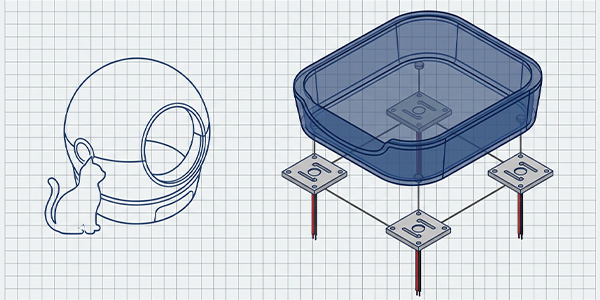
Unmanned vending machines are typically organized into several independent channels on each shelf based on product categories. Each channel — or each entire shelf — is equipped with one load cell that detects changes in the weight of the products stored within. This setup allows the machine to monitor the quantity or weight of products taken by consumers accurately.
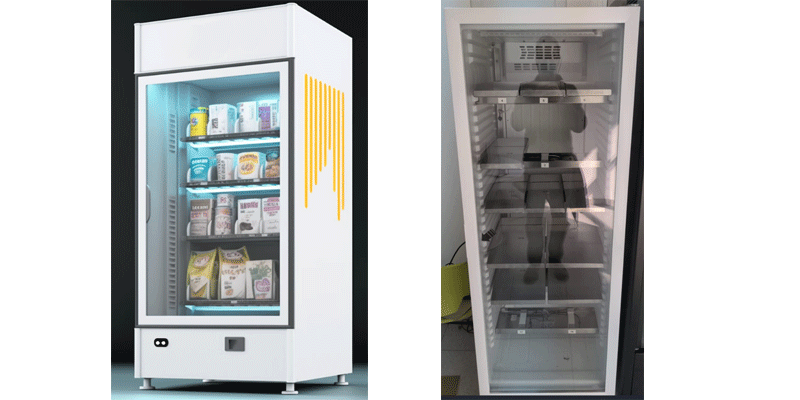
The system architecture follows a clear signal chain from sensor to cloud:
|
Layer
|
Component
|
Function
|
|
1
|
Load Cell (per shelf)
|
Converts shelf weight to mV signal (analog) or RS485 data (digital)
|
|
2
|
ADC / Signal Conditioner
|
HX711 (24-bit) for analog sensors; built-in A/D for digital GPB-D series
|
|
3
|
MCU / Edge Processor
|
Manages multi-shelf data, runs weight-delta algorithm, interfaces with camera AI
|
|
4
|
Display & Payment Module
|
Shows item list and total price; processes QR code payment
|
|
5
|
Network Gateway
|
4G/Wi-Fi/Ethernet → uploads transaction data and inventory status
|
|
6
|
Cloud Management Platform
|
Remote inventory, sales analytics, predictive restocking, multi-machine fleet management
|
Recommended Load Cells for Vending Machines
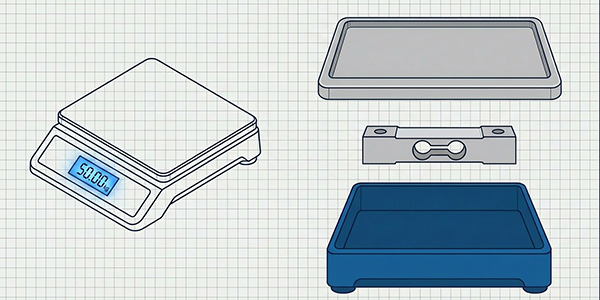
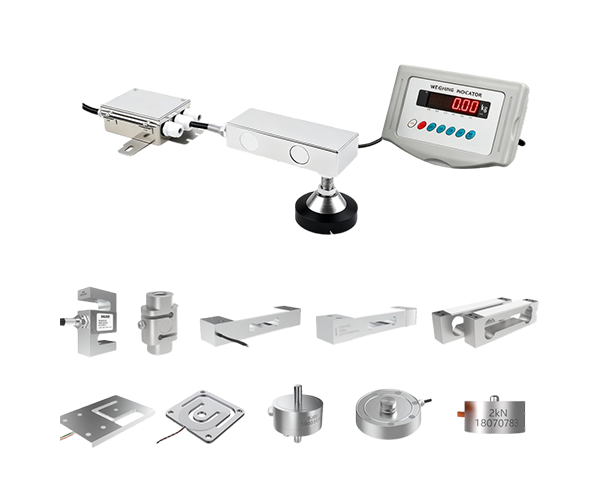
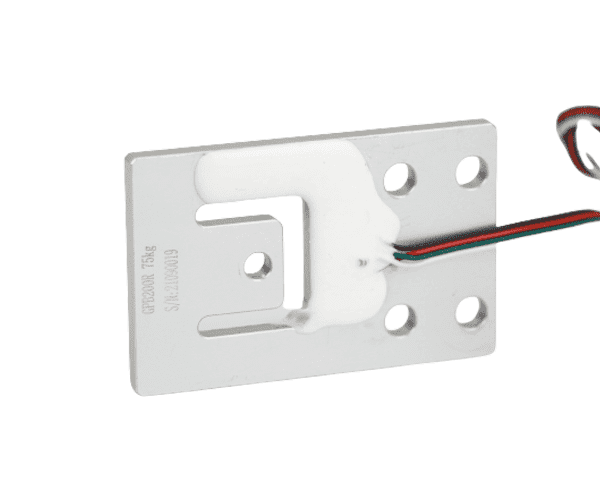
The core component in each weighing unit is the load cell, selected based on shelf platform size and the weight range of products being stored. GALOCE offers six models — three analog (mV output) and three digital (RS485/RS232 output) — covering shelves from 300×250 mm to 600×600 mm and capacities from 3 kg to 600 kg.
Product Selection Overview
|
Model
|
Capacity (kg)
|
Accuracy
|
Dimensions (mm)
|
Max Platform (mm)
|
Output Signal
|
Installation
|
|
GPB100R
|
3–100
|
±0.02% F.S
|
130×30×22
|
300×250
|
mV (analog)
|
Single piece
|
|
GPB100D
|
3–50
|
1 g division
|
130×30×22
|
300×250
|
RS485/RS232
|
Single piece
|
|
GPB158
|
60–300
|
±0.02% F.S
|
150×38×22
|
400×400
|
mV (analog)
|
Single piece
|
|
GPB158D
|
60–300
|
2 g / 5 g division
|
150×38×22
|
400×400
|
RS485/RS232
|
Single piece
|
|
GPB200R
|
7.5–600
|
±0.05–0.02% F.S
|
70×45×4.5
|
600×600
|
mV (analog)
|
Single piece
|
|
GPB200D
|
7.5–600
|
5 g / 10 g division
|
70×45×4.5
|
600×600
|
RS485/RS232
|
Single piece
|
Analog vs Digital: Which to Choose?
|
Feature
|
Analog (GPB100R / GPB158 / GPB200R)
|
Digital (GPB100D / GPB158D / GPB200D)
|
|
Output Signal
|
mV/V analog (≈2 mV/V at full scale)
|
RS485 / RS232 digital, factory-calibrated
|
|
External Components
|
Requires HX711 or external ADC per sensor
|
Built-in A/D converter — no external ADC needed
|
|
Multi-Shelf Wiring
|
One ADC per sensor; star wiring topology
|
RS485 bus — daisy-chain up to 32 shelves on 2 wires
|
|
Calibration
|
On-site calibration required (tare + span)
|
Factory-calibrated; gravity compensation built-in
|
|
Noise Immunity
|
Susceptible to EMI from compressors/fans
|
Digital signal highly immune to electrical noise
|
|
Remote Diagnostics
|
Limited — MCU reads raw ADC values only
|
Self-diagnostics: zero drift, overload, open-circuit alerts
|
|
Cost
|
Lower sensor cost, but ADC adds BOM
|
Higher sensor cost, but saves ADC + wiring labor
|
|
Best For
|
Cost-sensitive machines with ≤4 shelves
|
Large fleet deployments, multi-shelf (≥5) machines
|
GPB100R / GPB100D — Small Shelf (≤300×250 mm, 3–100 kg)
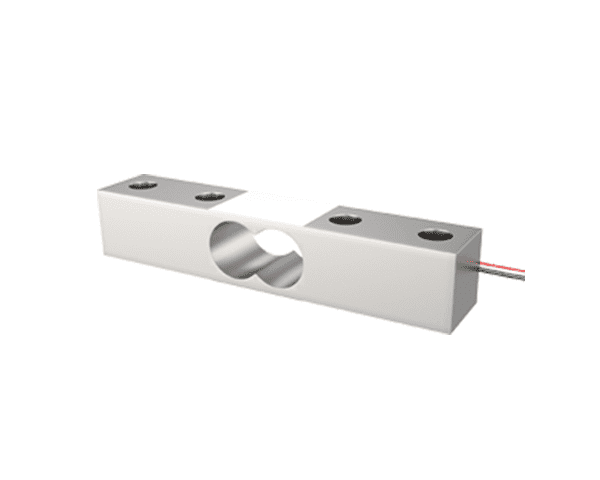
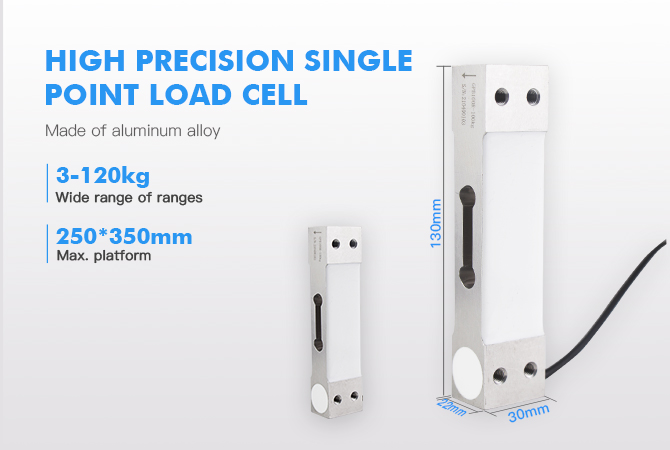
The GPB100R (analog) and GPB100D (digital RS485) are single-point load cells designed for compact vending machine shelves holding snacks, beverages, and small packaged goods. Their 130×30×22 mm aluminum body supports platforms up to 300×250 mm with ±0.02% F.S accuracy — sufficient to detect a single can of soda (≈330 g) being removed from a fully stocked 30 kg shelf.
|
Specification
|
GPB100R (Analog)
|
GPB100D (Digital)
|
|
Capacity
|
3, 5, 7, 10, 15, 20, 30, 50, 75, 100 kg
|
3, 5, 7, 10, 15, 20, 30, 50 kg
|
|
Accuracy
|
C3 class, ±0.02% F.S
|
1 g division (factory-calibrated)
|
|
Sensitivity
|
2.0 ± 0.2 mV/V
|
Digital output (RS485/RS232)
|
|
Material
|
Aluminum alloy
|
Aluminum alloy
|
|
Dimensions
|
130 × 30 × 22 mm
|
130 × 30 × 22 mm
|
|
Max Platform
|
300 × 250 mm
|
300 × 250 mm
|
|
Protection
|
IP65
|
IP65
|
|
Cable Length
|
450 mm (4-wire)
|
500 mm (4-wire RS485)
|
View GPB100R Product Details → | View GPB100D Product Details →
GPB158 / GPB158D — Medium Shelf (≤400×400 mm, 60–300 kg)
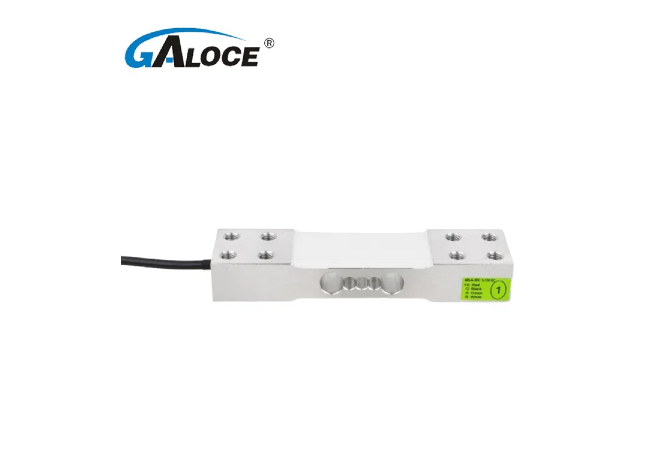
The GPB158 (analog) and GPB158D (digital) are designed for heavier vending machine shelves — such as those stocking beverages in glass bottles, multi-pack goods, or fresh produce. The 150×38×22 mm body supports platforms up to 400×400 mm, and the ±0.02% F.S accuracy (2 g/5 g division for digital) ensures reliable detection even when individual items weigh several kilograms.
|
Specification
|
GPB158 (Analog)
|
GPB158D (Digital)
|
|
Capacity
|
60, 100, 150, 200, 300 kg
|
60, 100, 150, 200, 300 kg
|
|
Accuracy
|
±0.02% F.S
|
2 g / 5 g division
|
|
Dimensions
|
150 × 38 × 22 mm
|
150 × 38 × 22 mm
|
|
Max Platform
|
400 × 400 mm
|
400 × 400 mm
|
|
Output Signal
|
mV/V analog
|
RS485/RS232 digital
|
|
Protection
|
IP65
|
IP65
|
View GPB158D Product Details →
GPB200R / GPB200D — Large Shelf (≤600×600 mm, 7.5–600 kg)
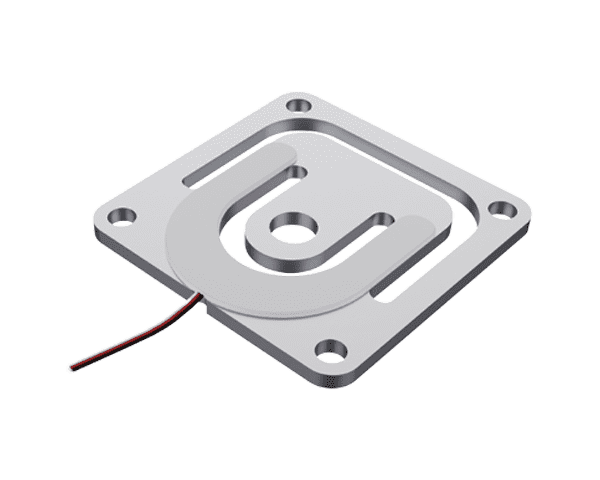
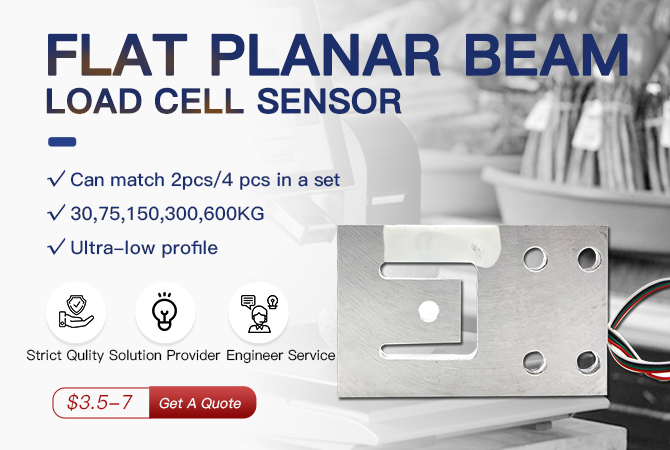
The GPB200R (analog) and GPB200D (digital) are ultra-thin planar beam load cells with a profile of only 4.5 mm — making them ideal for warehouse-style vending machines and automated retail kiosks where shelf height is limited. Despite the slim profile, they support platforms up to 600×600 mm and capacities up to 600 kg, suitable for bulk items, multi-pack beverages, and large retail goods.
|
Specification
|
GPB200R (Analog)
|
GPB200D (Digital)
|
|
Capacity
|
7.5, 15, 30, 50, 100, 200, 300, 500, 600 kg
|
7.5, 15, 30, 50, 100, 200, 300, 500, 600 kg
|
|
Accuracy
|
±0.05–0.02% F.S
|
5 g / 10 g division
|
|
Dimensions
|
70 × 45 × 4.5 mm (ultra-thin)
|
70 × 45 × 4.5 mm (ultra-thin)
|
|
Max Platform
|
600 × 600 mm
|
600 × 600 mm
|
|
Output Signal
|
mV/V analog
|
RS485/RS232 digital
|
|
Material
|
Aluminum alloy
|
Aluminum alloy
|
View GPB200R Product Details →
Why Choose Single-Point Load Cells for Vending Machines?
All six recommended models are single-point load cells — meaning one sensor alone can support an entire shelf platform without needing a second sensor or junction box. This design is critical for vending machine applications:
|
Advantage
|
Vending Machine Benefit
|
|
Single Sensor per Shelf
|
One load cell handles the entire platform — fewer components, fewer failure points, lower cost
|
|
Off-Center Load Tolerance
|
Items can be placed anywhere on the shelf — no need for guided positioning rails
|
|
No Junction Box
|
Eliminates the need for summing boxes required by 4-sensor configurations — saves space and wiring complexity
|
|
Compact Footprint
|
130–150 mm length fits within standard vending machine shelf profiles; GPB200R is only 4.5 mm thick
|
|
IP65 Protection
|
Withstands condensation from refrigerated cabinets and accidental beverage spills
|
|
Factory-Calibrated (Digital)
|
GPB-D series ships pre-calibrated — install and read, no on-site calibration needed
|
Installation & Wiring Guide
Mechanical Installation
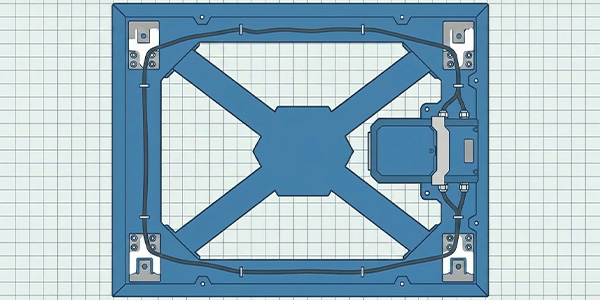
Each load cell is mounted at the center of the shelf underside, with the fixed end bolted to the machine frame and the loading end supporting the shelf platform:
-
Fix the rigid end of the load cell to the machine frame using M5 or M6 bolts — torque to 4–5 Nm
-
Attach the shelf platform to the loading end; ensure the platform sits level (use a spirit level)
-
Maintain a 0.5–1 mm gap between the shelf edge and machine walls to prevent friction interference
-
For refrigerated machines, route cables away from the evaporator to avoid condensation on connectors
-
Use vibration-damping washers if the machine is located in a high-vibration environment (e.g., near transit hubs)
-
Ensure cable strain relief — no tension on the sensor cable during door open/close cycles
Analog (GPB100R / GPB158 / GPB200R) — 4-Wire to HX711
|
Wire Color
|
Signal
|
HX711 Pin
|
|
Red
|
Excitation + (E+)
|
E+
|
|
Black
|
Excitation − (E−)
|
E−
|
|
Green
|
Signal + (S+)
|
A+
|
|
White
|
Signal − (S−)
|
A−
|
For machines with multiple analog shelves, each shelf requires a dedicated HX711 ADC. The MCU reads each HX711 sequentially via its clock/data lines. This star topology is simple but increases wiring as shelf count grows.
Digital (GPB100D / GPB158D / GPB200D) — RS485 Bus
|
Wire Color
|
Signal
|
Bus Connection
|
|
Red
|
VCC (5–12 V DC)
|
Power bus (+)
|
|
Black
|
GND
|
Power bus (−)
|
|
Yellow
|
RS485 A (+)
|
Daisy-chain A bus
|
|
Blue
|
RS485 B (−)
|
Daisy-chain B bus
|
All digital sensors share the same 4-wire bus — daisy-chained from shelf to shelf. Each sensor has a unique Modbus address (set via DIP switch or software command). The MCU polls each address in sequence; up to 32 sensors can coexist on one bus. A 120 Ω termination resistor is installed at the bus endpoints to prevent signal reflection.
5-Step Calibration
|
Step
|
Action
|
Details
|
|
1
|
Power on & warm-up
|
Let sensors stabilize for 5 minutes (especially in refrigerated machines)
|
|
2
|
Zero calibration (tare)
|
Empty all shelves; record zero reading for each sensor. For digital: auto-tare command
|
|
3
|
Span calibration
|
Place a known calibration weight (e.g., 5 kg) on each shelf center; record span value. For digital: factory-calibrated, skip
|
|
4
|
Product database setup
|
Enter each SKU's unit weight into the system; verify weight-delta ÷ unit weight = correct quantity
|
|
5
|
Dual-verification test
|
Simulate purchases (take 1, 2, 3 items); confirm weight change matches camera detection; test return/refund scenario
|
Selection Criteria
|
Criterion
|
Recommended Spec
|
Why It Matters for Vending
|
|
Shelf Platform Size
|
Match sensor's max platform spec (300×250 / 400×400 / 600×600 mm)
|
Oversized platforms cause off-center errors; undersized sensors limit shelf design
|
|
Capacity Range
|
Max shelf load should be ≤70% of sensor capacity
|
Safety margin prevents overload during restocking; maintains accuracy over lifespan
|
|
Resolution
|
≤2 g for snack shelves; ≤10 g for beverage/bulk shelves
|
Must detect the lightest single item in the product database (e.g., a 15 g candy bar)
|
|
Output Type
|
Analog (mV) for ≤4 shelves; Digital (RS485) for ≥5 shelves
|
RS485 bus simplifies multi-shelf wiring and enables remote diagnostics at fleet scale
|
|
Protection Rating
|
IP65 minimum
|
Refrigerated cabinets have condensation; beverage spills are common
|
|
Temperature Range
|
−10 °C to +40 °C (refrigerated); −10 °C to +50 °C (ambient)
|
Cold-chain vending requires sensors rated for sub-zero operation
|
|
Sensor Height
|
≤22 mm (GPB100R/158); ≤4.5 mm (GPB200R)
|
Low-profile sensors maximize usable shelf space inside the machine
|
Application Scenarios
|
Scenario
|
Typical Products
|
Recommended Model
|
|
Office Snack Cabinet
|
Chips, candy, cookies, small drinks (3–15 kg/shelf)
|
GPB100R / GPB100D
|
|
Community Fresh Food
|
Vegetables, fruits, eggs, dairy (15–50 kg/shelf)
|
GPB100R / GPB100D
|
|
Airport Beverage Wall
|
Bottled water, juice, energy drinks (60–200 kg/shelf)
|
GPB158 / GPB158D
|
|
Hospital Meal Kiosk
|
Pre-packaged meals, fruit cups, drinks (30–100 kg/shelf)
|
GPB100D (hygiene → RS485 diagnostics)
|
|
Warehouse Auto-Retail
|
Multi-pack beverages, bulk goods, large items (200–600 kg/shelf)
|
GPB200R / GPB200D
|
|
University Smart Canteen
|
Mixed items across 8–12 shelves (multi-shelf machine)
|
GPB100D ×8–12 (RS485 bus)
|
Market Trends
|
Trend
|
Impact on Load Cell Selection
|
|
Grab-and-Go Expansion
|
Open-door format replacing coil-drop machines; weight sensing becomes mandatory, not optional
|
|
RS485 Digital Adoption
|
Fleet operators demand remote diagnostics; GPB-D series enables zero-calibration deployment and predictive maintenance
|
|
Fresh Food Vending
|
Refrigerated cabinets with produce/meals require IP65 sensors with cold-temperature stability (−10 °C rated)
|
|
AI + Weight Fusion
|
Next-gen machines fuse camera AI with weight data for 99.9%+ accuracy; high-resolution digital sensors preferred
|
|
Ultra-Thin Shelf Design
|
GPB200R's 4.5 mm profile enables new machine designs with more shelves per unit volume
|
|
Cloud Fleet Management
|
Operators manage hundreds of machines remotely; digital RS485 sensors provide self-diagnostic data (zero drift, overload events) to cloud platform
|
Frequently Asked Questions
Q1: Should I choose analog (GPB-R) or digital (GPB-D) load cells for my vending machine?
For machines with ≤4 shelves and cost-sensitive deployments, analog GPB-R series with external HX711 ADCs is sufficient. For machines with ≥5 shelves, or when deploying a fleet of machines that need remote monitoring, digital GPB-D series (RS485) is strongly recommended — the daisy-chain bus dramatically simplifies wiring, and factory calibration eliminates on-site setup time.
Q2: How many load cells do I need per vending machine?
Typically one load cell per shelf. A standard grab-and-go vending machine has 4–8 shelves, so you need 4–8 sensors. Because all recommended models are single-point type, no junction box or additional sensors are needed — one sensor handles the entire shelf platform.
Q3: Can the load cell detect which specific product was taken?
The load cell measures total weight change. By combining this with a product database (where each SKU has a known unit weight), the system calculates quantity taken = weight delta ÷ unit weight. For items with identical weights but different prices, camera vision provides the distinguishing identification. This is why the dual weight + camera approach is so powerful.
Q4: What happens if a customer puts an item back on a different shelf?
The system detects a weight increase on the destination shelf and a matching decrease on the source shelf. Since no payment has been processed yet (the door is still open), the net effect is correctly calculated when the door closes. The customer is only charged for the net items removed from the machine.
Q5: Do the sensors work in refrigerated vending machines?
Yes. All six models are rated IP65 and operate from −10 °C to +40 °C. The aluminum alloy construction resists condensation corrosion. For deep-freeze applications (below −10 °C), consult GALOCE for customized temperature compensation.
Q6: How often do the sensors need recalibration?
Analog sensors (GPB-R series) should be checked every 6–12 months, especially in high-traffic locations. Digital sensors (GPB-D series) have factory calibration with built-in temperature compensation and zero-drift correction — they typically maintain accuracy for 2+ years without recalibration. The RS485 self-diagnostic feature sends alerts if drift exceeds threshold.
Q7: Can I mix analog and digital sensors in the same machine?
Technically yes — the MCU can read both HX711 (analog) and RS485 (digital) interfaces simultaneously. However, for simplicity and maintenance, we recommend using all-analog or all-digital within a single machine. If different shelves have very different capacity needs (e.g., 10 kg snack shelf + 300 kg beverage shelf), you can mix GPB100D + GPB158D on the same RS485 bus — they communicate using the same Modbus protocol.
Get Started with GALOCE Vending Machine Sensors
Whether you are building a 4-shelf office snack cabinet or a 12-shelf university smart canteen, GALOCE has the right load cell for your vending machine — from the compact GPB100R (3–100 kg) to the ultra-thin GPB200R (7.5–600 kg), with analog and digital RS485 options at every capacity tier.