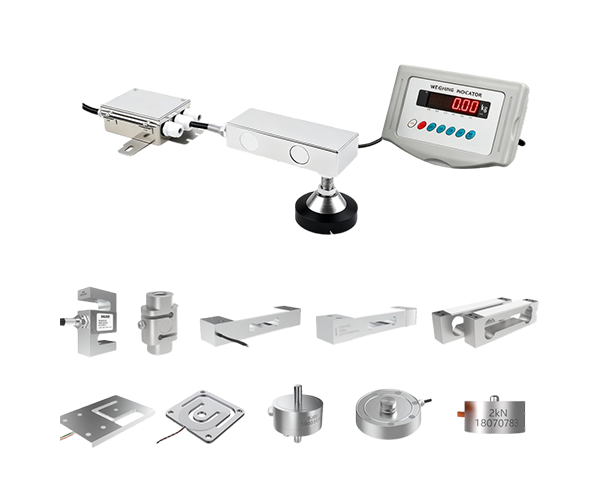
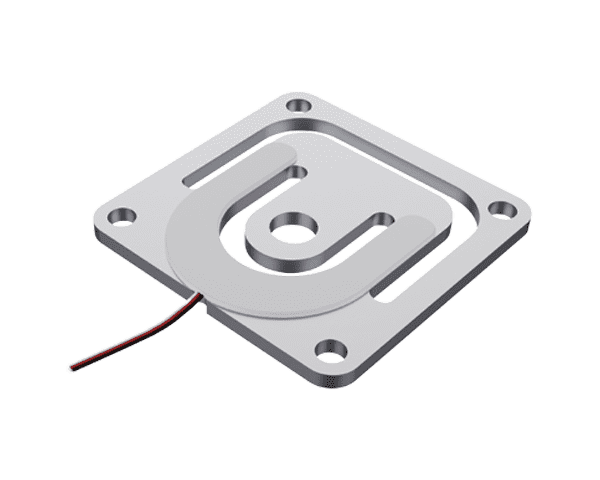
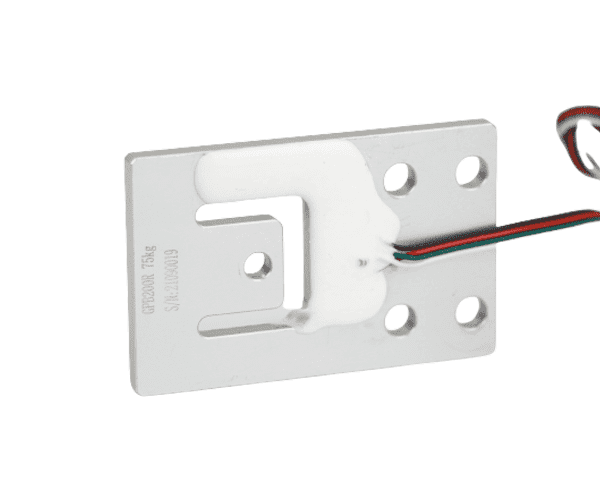
Why Load Cells Are the Core of Reverse Vending Machines
Reverse Vending Machines (RVMs) are transforming how communities handle recyclable waste. But behind every bottle deposited and every reward dispensed, a precision load cell silently measures the weight of each item — ensuring fair compensation, accurate sorting data, and reliable system operation. In this article, we explain how load cells power RVMs, which specifications matter most, and why the GALOCE GPB100R single-point load cell has become the sensor of choice for RVM manufacturers worldwide.
Key Takeaway: An RVM typically requires a single-point load cell with 15 kg capacity and 1 g resolution, installed on the weighing platform below the drop-off port. The GALOCE GPB100R delivers C3 accuracy (±0.02% F.S), a 3–100 kg range, and IP65 protection in a compact 130×30×22 mm aluminum-alloy body — purpose-built for RVM weighing platforms. For applications requiring digital communication, the GPB100D variant offers RS485/RS232 output for direct MCU integration without external amplification.
What Is a Reverse Vending Machine (RVM)?
A Reverse Vending Machine (RVM) is an intelligent recycling device that collects used beverage containers — primarily plastic bottles and aluminum cans — and rewards the user with points, cash back, discount vouchers, or donations to charity. The user simply inserts empty containers into the machine's feed chute; the RVM then automatically identifies the material type (PET plastic, aluminum, glass), counts or weighs each item, crushes or stores it, and issues the corresponding reward.
RVMs are widely deployed in shopping malls, supermarkets, community recycling stations, schools, subway stations, and other public spaces. They are a critical infrastructure component for "waste-free city" initiatives and the circular economy, bridging the gap between consumer recycling behavior and industrial material recovery.
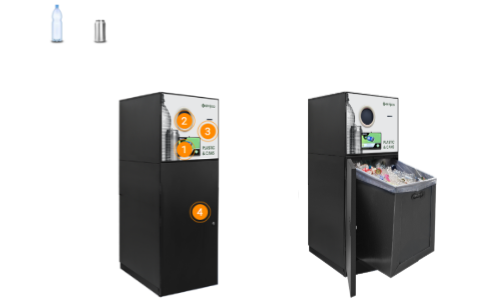
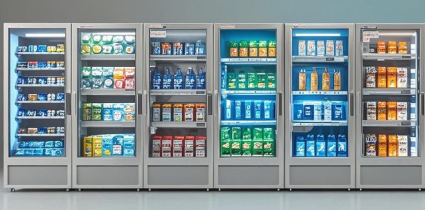
Two types of Reverse Vending Machines — bottle-only (left) and multi-material (right)
RVM Types and Their Weighing Requirements
Not all RVMs are the same. Different machine designs place different demands on the load cell:
|
RVM Type
|
Typical Capacity
|
Resolution
|
Weighing Function
|
Recommended Model
|
|
Bottle-Only RVM
|
3–15 kg
|
1 g
|
Weight verification per bottle; fraud detection
|
GPB100R (3 kg, mV output)
|
|
Multi-Material RVM
|
15–30 kg
|
1–5 g
|
Weigh mixed materials; sort by density
|
GPB100R (15 kg, mV output)
|
|
Compacting RVM
|
30–75 kg
|
10 g
|
Monitor storage bin fill level by total weight
|
GPB100R (50 kg, mV or GPB100D digital)
|
|
Smart Recycling Station
|
75–100 kg
|
20 g
|
Multi-bin total weight; fill-level alerts
|
GPB100D (100 kg, RS485 digital output)
|
How Load Cells Work in RVMs
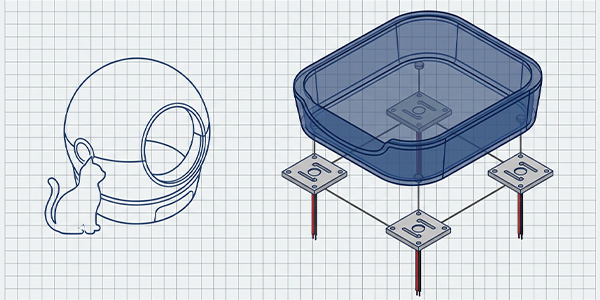
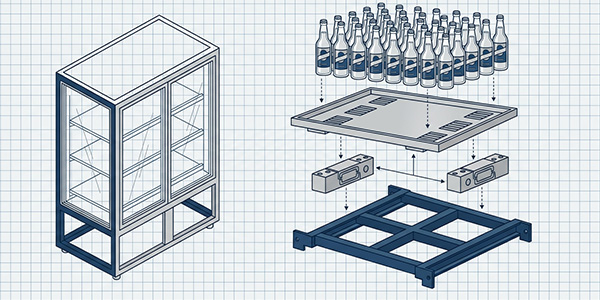
In an RVM, the load cell is installed on the weighing platform below the drop-off port. When a user inserts a plastic bottle or can, the item falls onto the weighing platform, and the load cell detects the weight. Here is how the full measurement chain works:
-
Container Drop: The user inserts a bottle or can into the feed chute. A sensor detects the item's arrival and triggers the weighing sequence.
-
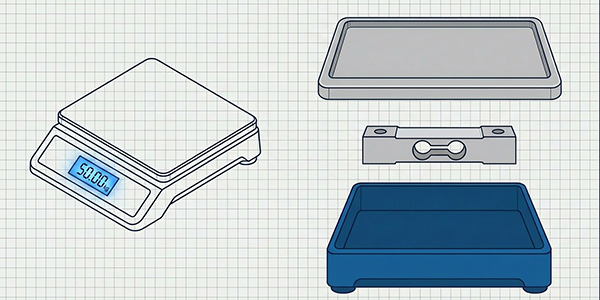
Weight Measurement: The container lands on the weighing platform, which is bolted to the GPB100R single-point load cell. The cell's parallel beam structure converts the downward force into a proportional mV/V signal via a Wheatstone bridge strain gauge circuit.
-
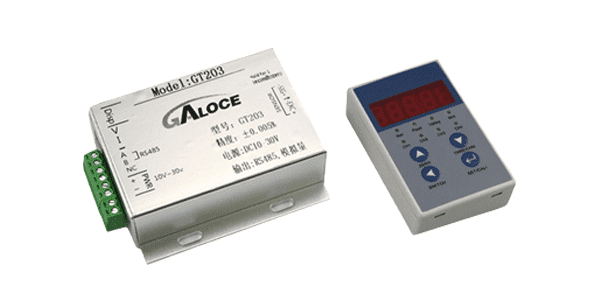
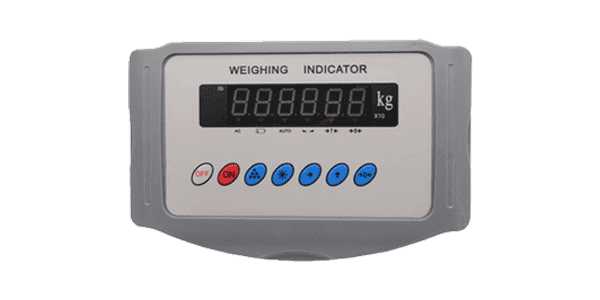
Signal Processing: The indicator's ADC (analog-to-digital converter) amplifies and digitizes the mV signal. For GPB100D models, this conversion happens inside the sensor itself, outputting a clean digital value via RS485 or RS232 directly to the RVM's main controller.
-
Material Identification: The RVM combines the weight data with optical scanner input (barcode, shape recognition) to identify the container type and verify it is an acceptable recyclable material.
-
Fraud Detection: The weight is cross-checked against expected values for the identified container type. If a bottle has been filled with liquid to increase its weight (a common fraud attempt), the discrepancy is flagged and the reward is denied.
-
Reward Calculation: The system calculates the reward (points, cash, or voucher) based on the container count and/or total weight, and issues it to the user via the display screen or a printed receipt.
-
Storage & Compaction: The container is directed to the appropriate storage bin. In compacting RVMs, a crusher compresses plastic bottles to reduce volume, and the load cell may also monitor the total accumulated weight to trigger bin-full alerts.
Why Single-Point Load Cells Are Ideal for RVMs
RVMs use single-point load cells rather than multi-cell configurations. This design choice is driven by several RVM-specific requirements:
-
Single-Sensor Simplicity: RVM weighing platforms are small (typically 250×350 mm), so a single load cell at the center can handle the entire load — no junction board, no corner-matching, no trim potentiometers. Fewer components means fewer failure points in an unattended public machine.
-
Off-Center Load Tolerance: Bottles and cans rarely land dead-center on the platform. The GPB100R's parallel beam structure is specifically designed to maintain accuracy across the entire platform area — the same weight is recorded regardless of where the container comes to rest.
-
Compact Footprint: RVMs are space-constrained machines packed with motors, crushers, conveyors, and storage bins. The GPB100R's 130×30×22 mm dimensions fit easily within the tight mechanical layout.
-
Cost Efficiency: One sensor is cheaper than four. For high-volume RVM deployment (hundreds or thousands of units across a city), the single-cell architecture significantly reduces per-unit cost.
GPB100R: The Recommended Load Cell for RVMs
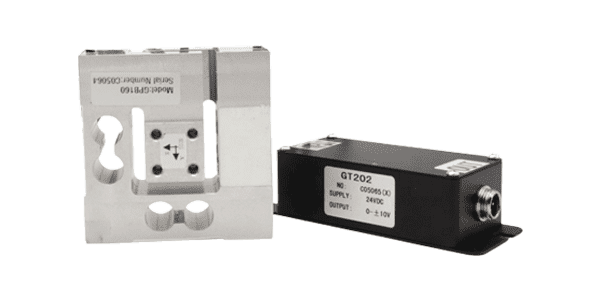
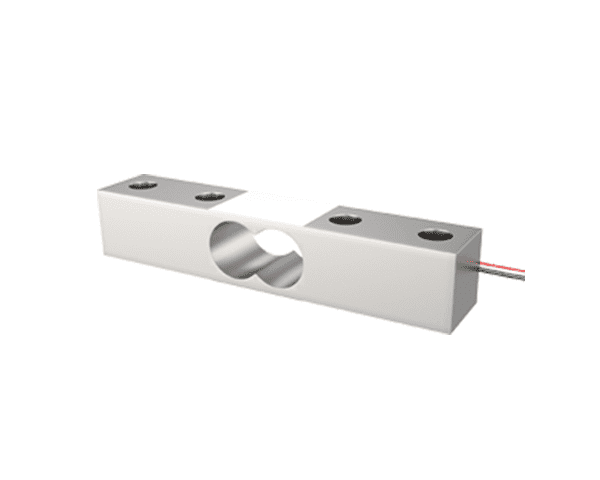
The GALOCE GPB100R is a high-performance single-point load cell engineered with a parallel beam structure for exceptional off-center load resistance. Its C3 accuracy, compact size, and proven RVM customer case make it the ideal sensor for reverse vending applications:
|
Specification
|
GPB100R
|
|
Type
|
Single-point load cell (parallel beam)
|
|
Capacity Range
|
3–100 kg (selectable: 3, 6, 10, 15, 20, 30, 50, 75, 100 kg)
|
|
Comprehensive Error
|
±0.02% F.S
|
|
Accuracy Class
|
C3 (OIML R60)
|
|
Sensitivity
|
2.0 ±0.2 mV/V
|
|
Dimensions
|
130×30×22 mm
|
|
Mounting
|
4× M6 threaded holes
|
|
Material
|
Anodized aluminum alloy
|
|
Protection Rating
|
IP65 (dust-tight, water-jet resistant)
|
|
Recommended Platform
|
250×350 mm (single-cell installation)
|
|
Output Options
|
mV/V signal (GPB100R) / RS485 or RS232 digital (GPB100D)
|
|
Certification
|
CE / RoHS, OEM customization
|
Featured: GPB100R Single-Point Load Cell
-
● C3 accuracy: ±0.02% F.S comprehensive error delivers reliable 1 g resolution on a 15 kg platform — precise enough to distinguish between an empty and liquid-filled bottle
-
● Off-center load resistance: Parallel beam structure maintains accuracy across the full 250×350 mm platform — bottles landing at any position produce the same weight reading
-
● IP65 protection: Dust-tight and water-jet resistant — RVMs operate outdoors and in humid environments; spilled liquids and cleaning sprays will not damage the sensor
-
● Compact & standardized: 130×30×22 mm with 4×M6 mounting holes fits any RVM layout; standardized production process reduces cost for high-volume deployment
-
● Proven RVM application: Successfully deployed in real RVM customer cases for PET bottle and can recycling — field-tested reliability
-
● Digital option available: The GPB100D variant offers RS485/RS232 output for direct MCU integration — no external amplifier or ADC required
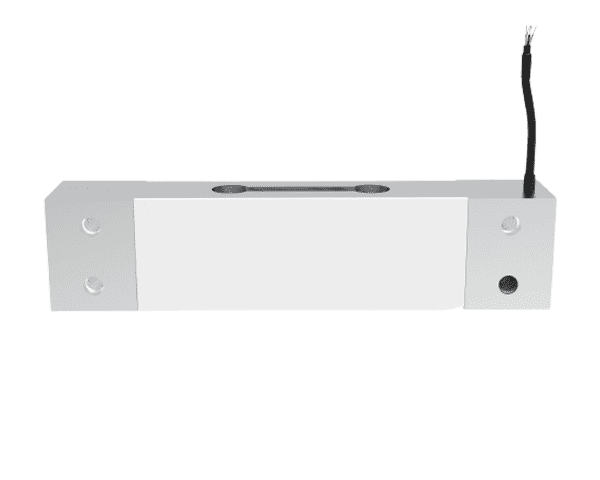
GPB100R single-point load cell — C3 accuracy, 3–100 kg, IP65, purpose-built for RVM weighing platforms
mV Output vs. Digital Output: GPB100R vs. GPB100D
GALOCE offers two output variants for the same physical sensor, allowing RVM manufacturers to choose based on their system architecture:
|
Feature
|
GPB100R (mV Output)
|
GPB100D (Digital Output)
|
|
Output Signal
|
2.0 ±0.2 mV/V (analog)
|
RS485 or RS232 (digital)
|
|
External Components
|
Requires external amplifier + ADC
|
Built-in ADC; direct MCU connection
|
|
Cable Length
|
Short runs (mV signal degrades over distance)
|
Long runs (RS485 up to 1200 m)
|
|
Noise Immunity
|
Susceptible to EMI in motor-driven RVMs
|
High — digital signal immune to analog noise
|
|
Cost
|
Lower sensor cost; higher system cost (amplifier)
|
Higher sensor cost; lower system cost (no amplifier)
|
|
Best For
|
Compact RVMs with short cable runs and built-in ADC
|
Large RVMs / smart stations with long cable runs and EMI
|
Also available: GPB100X and GPB100X3 variants with mV signal output for alternative mounting configurations. All variants share the same C3 accuracy and aluminum-alloy construction.
Installation and Wiring Guide
Mechanical Installation
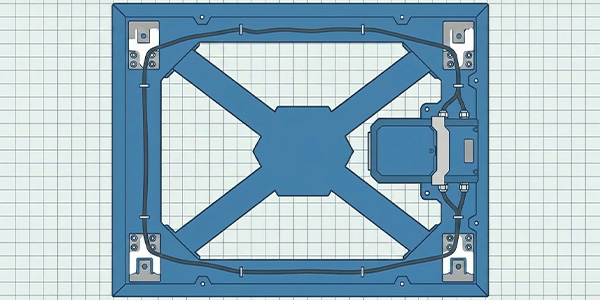
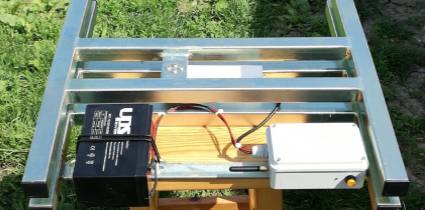
The GPB100R is installed as a single-point sensor: one end of the load cell is fixed to the RVM frame, and the other end (the loaded end) supports the weighing platform. The platform is bolted to the cell via the 4×M6 threaded holes. GALOCE provides original weighing brackets that match the GPB100R for easy integration.
-
Fixed end: Bolt rigidly to the RVM frame — this end must not move.
-
Loaded end: Suspend the weighing platform from this end — it must be free to deflect under load.
-
Platform size: 250×350 mm recommended for single-cell installation (factory corner-adjusted).
-
Overload protection: Include mechanical stops to prevent damage from users forcing objects into the chute.
Wiring (4-Wire Configuration)
-
Excitation (+): Red — supply positive from indicator (5–10 V DC)
-
Excitation (−): Black — supply ground
-
Signal (+): Green — positive measurement output (mV)
-
Signal (−): White — negative measurement output (mV)
For the GPB100D digital version, wiring uses RS485 (A/B) or RS232 (TX/RX/GND) connections directly to the RVM's main controller. Power supply is typically 5–12 V DC. No external amplifier or ADC is needed.
Calibration Steps
-
Zero Calibration: Power on the RVM with nothing on the weighing platform. The indicator records the zero point.
-
Span Calibration: Place a certified reference weight (e.g., 1 kg or 5 kg, OIML class M1) at the center of the platform. The indicator records the span point.
-
Corner-Load Check: Move the reference weight to four positions on the platform (center, front-left, front-right, rear). The GPB100R is factory-adjusted for corner error, so all positions should read within ±1 division.
-
Bottle Test: Drop a known-weight empty PET bottle (typically 18–25 g for 500 ml) onto the platform and verify the reading. Repeat with an aluminum can (13–15 g for 330 ml).
-
Fraud Detection Test: Fill a bottle with water and insert it. The system should flag the weight discrepancy (500 ml water = ~500 g vs. expected ~20 g) and reject the reward.
Real-World Application: GPB100R in RVM Customer Case
GALOCE's GPB100R has been successfully deployed in real RVM installations. The customer case highlights how the sensor solved key challenges in smart recycling:
Background: With the rapid development of economies worldwide, cities are placing increasing emphasis on urban sanitation. The "Internet + Smart Waste Sorting System" has begun to popularize, creating demand for reliable weighing sensors in smart trash bins and reverse vending machines.
Challenges: The customer needed sensors that could survive unattended public operation — dust, humidity, temperature swings, and occasional liquid spills — while maintaining 1 g accuracy for fraud detection. The sensor also needed to fit within a compact RVM chassis alongside motors, crushers, and storage bins.
Solution: GALOCE recommended the GPB100R for its C3 accuracy, IP65 protection, and compact 130×30×22 mm footprint. The parallel beam structure's off-center load tolerance ensured accurate readings regardless of where bottles landed on the platform. The result: a smart RVM capable of identifying, weighing, and compacting PET plastic bottles and metal cans — with reliable weight-based fraud detection and reward calculation.
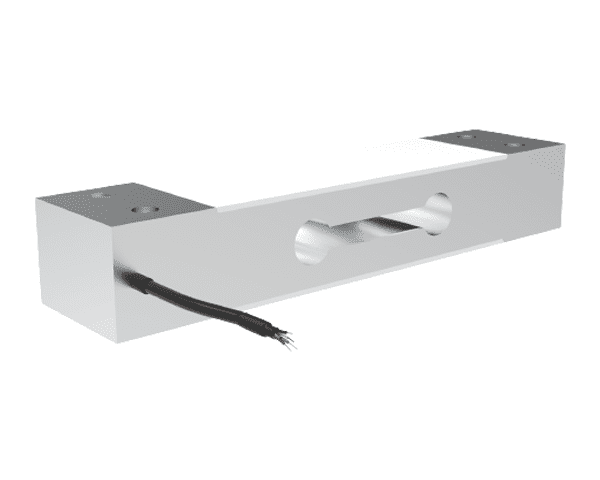
GPB100R in RVM customer case — smart reverse vending machine for PET bottle and can recycling
Key Selection Criteria for RVM Load Cells
|
Factor
|
GPB100R Spec
|
Why It Matters for RVMs
|
|
Capacity
|
3–100 kg
|
15 kg covers standard RVM (bottles + cans); 100 kg for storage-bin monitoring
|
|
Accuracy
|
±0.02% F.S (C3)
|
On 15 kg cell, absolute error is ±3 g — sufficient for 1 g display resolution and fraud detection
|
|
Long-Term Stability
|
C3 class, low creep
|
RVMs operate 24/7 unattended — sensor must maintain accuracy for months without recalibration
|
|
Environmental Protection
|
IP65
|
RVMs are outdoors or in public spaces — dust, rain, and spilled liquids are inevitable
|
|
Size
|
130×30×22 mm
|
RVMs are space-constrained — motors, crushers, and bins compete for internal volume
|
|
Output Options
|
mV (GPB100R) or RS485/RS232 (GPB100D)
|
Digital output simplifies integration in large RVMs with long cable runs and motor EMI
|
Industry Trends and Market Dynamics
The RVM market is experiencing explosive growth, driven by global sustainability mandates:
-
Deposit Return Schemes (DRS): Over 50 countries and regions have implemented or are planning DRS programs, where consumers pay a deposit on beverage containers and reclaim it by returning them through RVMs. The global RVM market is projected to exceed USD 650 million by 2030.
-
Circular Economy Mandates: The EU's Circular Economy Action Plan and similar legislation worldwide mandate high recycling rates for plastic bottles (77% by 2025, 90% by 2029 in the EU) — driving massive RVM deployment.
-
Smart Connected RVMs: Next-generation RVMs feature IoT connectivity for real-time fill-level monitoring, predictive maintenance, and remote diagnostics — favoring digital-output load cells like the GPB100D with RS485 communication.
-
AI-Powered Sorting: RVMs are integrating computer vision and AI to identify container brands, materials, and condition — with weight data from the load cell serving as a key cross-validation input.
-
Ultra-Compact Designs: Convenience stores, pharmacies, and petrol stations demand small-footprint RVMs — favoring compact single-point load cells like the GPB100R that minimize internal volume.
Frequently Asked Questions
What type of load cell is used in a reverse vending machine?
Most RVMs use a single-point load cell installed on the weighing platform below the drop-off port. The GPB100R is the recommended model: its parallel beam structure handles off-center loads from bottles landing at any position on the platform, and its compact size fits within the RVM chassis.
What capacity and resolution does an RVM load cell need?
A standard RVM requires a 15 kg capacity with 1 g resolution. This covers the weight of individual bottles and cans (10–50 g each) while providing enough headroom for multi-item deposits. The GPB100R's C3 accuracy (±0.02% F.S) on a 15 kg cell gives ±3 g absolute error — more than sufficient for 1 g display and fraud detection.
Should I choose GPB100R (mV) or GPB100D (digital) for my RVM?
For compact RVMs with short cable runs and a built-in ADC, the GPB100R (mV output) is simpler and lower cost. For large RVMs or smart recycling stations with long cable runs, motor EMI, and direct MCU integration, the GPB100D (RS485/RS232) eliminates the need for an external amplifier and provides superior noise immunity.
How does the RVM detect fraud (e.g., bottles filled with liquid)?
The RVM cross-checks the measured weight against the expected weight for the identified container type. A 500 ml empty PET bottle weighs ~20 g; if the load cell reads 500 g (water-filled), the system flags the discrepancy and denies the reward. The GPB100R's ±0.02% F.S accuracy ensures this fraud detection is reliable.
Is the GPB100R durable enough for outdoor RVM deployment?
Yes. The GPB100R's IP65 rating means it is dust-tight and resistant to water jets from any direction. The anodized aluminum alloy body resists corrosion. GALOCE also offers OEM customization including conformal coating and marine-grade options for harsh environments.
Can the GPB100R be used for storage-bin fill-level monitoring?
Yes. For compacting RVMs that need to monitor total accumulated weight in the storage bin, the GPB100R is available in capacities up to 100 kg. The sensor tracks total weight in real time and triggers a bin-full alert when the threshold is reached — enabling efficient collection scheduling. For multi-bin smart stations, the GPB100D with RS485 supports multi-drop networking across multiple sensors.
Building a Reverse Vending Machine That Recycles With Confidence?
Choose the GALOCE GPB100R — C3 accuracy, 3–100 kg, IP65, compact 130×30×22 mm. Proven in real RVM customer cases. Digital output (GPB100D) available for IoT-connected machines.