
Quality Control in Load Cell Manufacturing:How We Ensure Precision|GALOCE

TIME: 2025.12.24 AUTHOR: Carol Li NUMBER OF VIEWS 21
In the realm of industrial measurement, load cells play an unsung yet vital role. These devices convert various forces—whether tension, compression, or torque—into electrical signals, enabling precise weight and force measurement across industries such as manufacturing, aerospace, healthcare, and logistics. A single calibration error or defect in a load cell can lead to catastrophic consequences: cranes underestimating load weights, medical scales misreading patient weights, or entire production runs being scrapped due to inaccurate measurements. For this reason, quality control (QC) in load cell manufacturing is not merely a process step—it is the cornerstone of reliability and trust.
At our manufacturing facility, we have continuously refined our quality control processes over decades to ensure every load cell leaving our factory meets the highest standards of precision, durability, and consistency. This blog post takes you behind the scenes of our manufacturing process, revealing how we guarantee quality at every stage through rigorous quality control measures—from raw material inspection to final certification. Whether you're a buyer seeking to understand the core advantages of premium load cells or a manufacturing peer looking to optimize your own quality inspection procedures, this in-depth analysis will reveal the critical role of quality control in load cell production.

Understanding Load Cells: Why Precision Matters

Before delving into QC, it’s essential to grasp why precision is non-negotiable for load cells. Unlike many industrial components, load cells operate in environments where even minute errors can have far-reaching consequences. For example, in the aerospace industry, a load cell measuring the thrust of a jet engine must be accurate to within 0.1% of the full-scale range to ensure safe takeoffs and landings. In pharmaceutical manufacturing, a load cell monitoring the weight of active ingredients in medication must meet strict regulatory standards to avoid underdosing or overdosing patients.
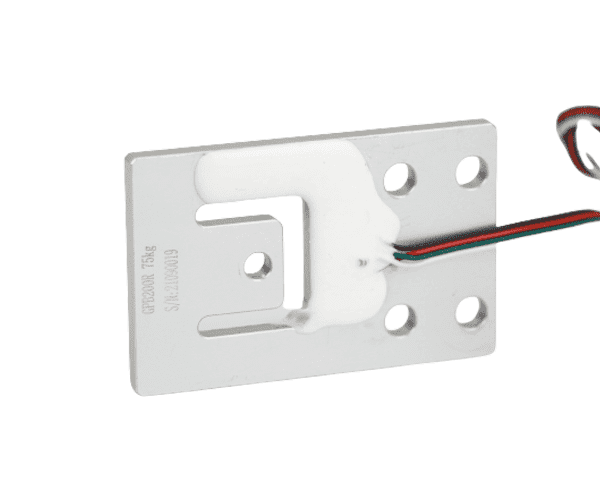
The core of a load cell’s precision lies in its design and materials. Most load cells use strain gauges—thin, flexible sensors that change resistance when stretched or compressed—bonded to a metal “spring element” (often aluminum, steel, or alloy). When force is applied, the spring element deforms slightly, causing the strain gauges to change resistance. This change is converted into an electrical signal, which is then processed to calculate the applied force. Any flaw in the spring element’s geometry, the strain gauge bonding, or the wiring can introduce error, making QC at every stage critical.

Stage 1: Raw Material Inspection—The Foundation of Quality

Quality control begins long before production starts: with the raw materials. The spring element, strain gauges, wiring, and housing materials all undergo rigorous testing to ensure they meet our specifications.

Spring Element Materials: Strength, Stability, and Consistency

The spring element is the load cell’s “backbone,” so its material properties directly impact performance. We source high-grade alloys—typically 17-4 PH stainless steel for high-precision applications and aluminum for lightweight, cost-sensitive ones—from certified suppliers. Upon arrival, each batch of material undergoes:
  • Chemical Composition Analysis: Using X-ray fluorescence (XRF) spectroscopy, we verify that the alloy contains the correct proportions of elements (e.g., chromium, nickel, copper in 17-4 PH steel). Even trace impurities can weaken the material or cause inconsistent deformation under load.
Mechanical Testing: Tensile tests measure the material’s yield strength, ultimate tensile strength, and elongation to ensure it can withstand the intended load range without permanent deformation. Hardness tests (Rockwell or Brinell) confirm the material’s resistance to wear and indentation, which is crucial for durability in harsh environments.
Microstructural Inspection: Metallographic analysis involves polishing and etching a sample of the material to examine its grain structure under a microscope. A uniform, fine-grained structure indicates good mechanical properties, while defects like inclusions or porosity can lead to premature failure.

Strain Gauges: The Heart of Measurement

Strain gauges are the load cell’s sensory organs, and their quality is paramount. We partner with leading strain gauge manufacturers but still subject each batch to in-house testing:
  • Resistance Testing: Each strain gauge is checked for resistance using a micro-ohmmeter to ensure it matches the specified value (typically 120, 350, or 1000 ohms). Gauges with resistance outside the tolerance range (±0.1%) are rejected.
Gauge Factor Verification: The gauge factor—the ratio of resistance change to strain—is measured using a calibration fixture that applies a known strain to the gauge. This ensures the gauge will produce a predictable signal when deformed.
  • Environmental Stability: Strain gauges are tested for resistance to temperature extremes (-40°C to 150°C), humidity, and corrosion, depending on the load cell’s intended application. For example, gauges used in marine environments must pass salt spray tests per ASTM B117 standards.

Wiring and Electronics: Ensuring Signal Integrity

The wiring and electronics (e.g., amplifiers, signal conditioners) carry the strain gauge signal to the output, so any degradation here can corrupt the measurement. We inspect:
  • Wire Insulation: Using a high-voltage tester, we check that wire insulation can withstand voltages up to 1000V AC for 1 minute without breakdown, preventing short circuits.
  • Connector Quality: Connectors are subjected to insertion/extraction tests (up to 1000 cycles) to ensure they maintain a secure electrical connection. Gold-plated contacts are inspected for thickness and uniformity to prevent corrosion.

Stage 2: Machining and Fabrication—Precision in Every Detail

Once raw materials pass inspection, production begins with machining the spring element. This step requires extreme precision, as even a 0.01mm deviation from the design blueprint can alter the load cell’s sensitivity or introduce hysteresis (a lag in measurement when force is applied and removed).

CNC Machining: Accuracy to Microns

We use computer numerical control (CNC) machining centers with high-precision spindles and tooling to shape the spring element. Our CNC machines are calibrated daily using laser interferometers, which measure positioning accuracy to within ±1 micron (0.001mm). Key QC checks during machining include:
  • Dimensional Inspection: After machining, each spring element is measured using coordinate measuring machines (CMMs)—3D scanning devices that capture thousands of data points to verify critical dimensions like hole positions, thickness, and contour. For example, the strain gauge bonding area must be flat to within 0.002mm to ensure uniform strain transfer from the spring element to the gauges.
  • Surface Finish: The surface of the spring element, especially where strain gauges are bonded, must be smooth to ensure proper adhesion. We use a profilometer to measure surface roughness (Ra value), with specifications typically ranging from 0.8 to 1.6 micrometers. A rough surface can trap air bubbles during bonding, weakening the bond and introducing error.
  • Stress Relief: After machining, the spring element undergoes heat treatment to relieve residual stresses from the cutting process. Residual stress can cause the element to deform over time, leading to measurement drift. We monitor the heat treatment process using thermocouples and verify stress relief via X-ray diffraction, which measures crystal lattice strain in the material.

Stage 3: Strain Gauge Application—The Art of Bonding

Bonding strain gauges to the spring element is one of the most delicate steps in load cell manufacturing. Even a tiny air bubble or misalignment can cause the strain gauge to measure incorrect strain, so this process is performed in a controlled environment and subject to strict QC.

Cleanroom Environment: Contamination Control

Strain gauge bonding takes place in a Class 10,000 cleanroom (fewer than 10,000 particles of 0.5 microns or larger per cubic foot of air) to prevent dust, moisture, or oils from interfering with the bond. Technicians wear lint-free suits, gloves, and face masks, and all tools are cleaned with isopropyl alcohol before use.

Bonding Process and Inspection

The bonding process involves applying a thin layer of adhesive (typically epoxy or cyanoacrylate) to the spring element, positioning the strain gauge, and curing the adhesive under controlled temperature and pressure. Key QC steps include:
  • Adhesive Mixing: Two-part adhesives are mixed using automated dispensers to ensure precise ratios, as incorrect mixing can weaken the bond or cause uneven curing.
  • Gauge Alignment: Using a microscope with crosshairs, we align the strain gauge to within ±0.1mm of the target position. Misalignment can cause the gauge to measure shear strain instead of axial strain, leading to cross-talk (unwanted signal from off-axis forces).
  • Bond Strength Testing: A sample of bonded strain gauges is subjected to a peel test, where a force is applied perpendicular to the bond until failure. The bond strength must exceed 5N/mm to ensure the gauge stays attached under load.
  • Bubble Detection: After curing, we use ultrasonic testing to check for voids or air bubbles in the adhesive layer. Bubbles appear as dark spots in the ultrasonic image, and any gauge with bubbles larger than 0.1mm² is rejected.

Stage 4: Wiring and Assembly—Protecting the Signal

Once strain gauges are bonded, the load cell is wired. Most load cells use a Wheatstone bridge configuration—four strain gauges wired in a bridge—to cancel out temperature effects and improve sensitivity. Wiring errors (e.g., swapping gauge leads) can drastically reduce accuracy, so this step is closely monitored.

Wheatstone Bridge Configuration

Technicians wire the strain gauges into a bridge using color-coded wires, following detailed diagrams. After wiring, we perform a bridge balance test using a precision multimeter. The bridge should output a voltage close to zero when no force is applied; any imbalance indicates a wiring error or a faulty gauge.

Environmental Protection

To ensure the load cell performs in harsh environments, we encapsulate the strain gauges and wiring in a protective coating (e.g., silicone rubber, epoxy, or parylene). QC checks here include:
  • Coating Thickness: Using a magnetic thickness gauge, we verify that the coating is between 0.2mm and 0.5mm thick—thick enough to protect against moisture and corrosion but thin enough to not restrict the spring element’s deformation.
  • Waterproof Testing: Load cells rated for wet environments undergo immersion testing, where they are submerged in water at 1m depth for 24 hours. Afterward, we check for signal degradation or short circuits using a megohmmeter (measuring insulation resistance >1000MΩ).

Stage 5: Calibration—Verifying Accuracy

Calibration is the final and most critical QC step, as it confirms the load cell meets its specified accuracy class. We follow ISO 17025 standards, and our calibration lab is accredited by the American Association for Laboratory Accreditation (A2LA), ensuring traceability to national measurement standards.

Calibration Setup

Each load cell is mounted in a calibration fixture that applies known forces using dead weights (for low-capacity load cells, <500kg) or hydraulic actuators (for high-capacity load cells, up to 1000 tons). The fixture is designed to apply force uniformly to the load cell, avoiding bending or torsion, which can introduce error.

Calibration Procedures

We perform a series of tests to evaluate key performance metrics:
  • Linearity: The load cell is loaded to 100% of its full-scale range in 10 increments, and the output is recorded. Linearity error is the maximum deviation of the measured output from the ideal straight line, typically specified as ±0.02% to ±0.1% of full scale.
  • Hysteresis: We load the cell to full scale and then unload it in the same increments, recording output at each step. Hysteresis error is the difference between the loading and unloading outputs at the same force, with specifications usually <0.03% of full scale.
  • Repeatability: The loading/unloading cycle is repeated three times, and the maximum variation in output at each force level is measured. Repeatability must be <0.02% of full scale to ensure consistent measurements.
  • Temperature Effects: Load cells are tested in a thermal chamber at temperatures ranging from -40°C to 85°C. We measure temperature-induced zero shift (output change when no force is applied) and sensitivity shift (change in output per unit force), ensuring they meet specifications (e.g., <0.002% of full scale per °C).

Data Analysis and Adjustment

After calibration, we analyze the data using specialized software. If the load cell’s error exceeds the specified tolerance, we may adjust the signal conditioner or trim resistors in the Wheatstone bridge to minimize error. Load cells that cannot be adjusted to meet standards are rejected.

Stage 6: Environmental and Reliability Testing—Ensuring Durability

Even a perfectly calibrated load cell can fail if it can’t withstand real-world conditions. We subject a sample of load cells from each production batch to environmental and reliability tests to ensure long-term performance.

Vibration Testing

Using electrodynamic shakers, we expose load cells to vibrations simulating transportation, industrial machinery, or aerospace environments. Tests follow ISO 16750 standards, with frequencies ranging from 10Hz to 2000Hz and accelerations up to 50g. After testing, we recalibrate the load cell to check for any shifts in accuracy.

Shock Testing

Load cells may experience sudden impacts (e.g., a dropped load in a warehouse). We use a drop tester to apply shock pulses up to 1000g for 1ms, then verify that the load cell still meets accuracy specifications.

Long-Term Stability

To assess drift over time, we subject load cells to a “creep” test: applying a constant force (typically 100% of full scale) for 1000 hours and monitoring the output. Creep error—the change in output over time—must be <0.05% of full scale after 1 hour and <0.1% after 1000 hours.

Stage 7: Final Inspection and Documentation

Before a load cell is shipped, it undergoes a final visual and functional inspection. Technicians check for cosmetic defects (e.g., scratches, dents), verify that all labels (serial number, capacity, accuracy class) are correct, and perform a last-minute calibration check.
Equally important is documentation. Each load cell comes with a calibration certificate, traceable to national standards, detailing:
  • Serial number and model
  • Calibration date and due date
  • Full-scale range and accuracy class
  • Test results for linearity, hysteresis, repeatability, and temperature effects
  • Environmental test data (if applicable)
This documentation is critical for customers in regulated industries (e.g., food, pharmaceuticals) who must demonstrate compliance with standards like FDA 21 CFR Part 11 or ISO 9001.

Continuous Improvement: Leveraging Data and Technology

Quality control is not static—we constantly refine our processes using data from rejected parts, customer feedback, and new technology. For example:
  • Statistical Process Control (SPC): We collect data from each QC step (e.g., CMM measurements, calibration results) and use SPC software to identify trends. If, say, a batch of spring elements shows higher-than-average hysteresis, we investigate the machining parameters or raw material lot to prevent future issues.
  • Automation: We’ve automated repetitive QC tasks (e.g., dimensional inspection with CMMs, bridge balance testing) to reduce human error and increase throughput. Automated systems can also collect more data points, improving the accuracy of SPC analysis.
  • Customer Feedback Loops: We track field failures and warranty claims to identify potential gaps in QC. For example, if a customer reports a load cell failing in a high-humidity environment, we may enhance our waterproof testing protocols.

Conclusion: Quality as a Commitment

Quality control in load cell manufacturing is a relentless pursuit of precision, from raw material inspection to final calibration. At our facility, we view QC not as a cost but as an investment in customer trust and safety. Every rejected batch, every hour spent calibrating, and every new testing protocol is driven by the knowledge that our load cells play a critical role in our customers’ operations.
For industries where accuracy is non-negotiable, choosing a load cell manufacturer with robust QC practices is essential. By prioritizing quality at every stage, we ensure that our load cells don’t just meet specifications—they exceed them, providing reliable measurements that our customers can depend on, day in and day out.
In the end, precision isn’t just a feature of our load cells—it’s our promise.

HOT keyword: Load Cell
Recommend View More
TIME 2025.12.24

Quality Control in Load Cell Manufacturing:How We Ensure Precision|GALOCE

Discover how rigorous quality control ensures unparalleled precision and reliability in load cell manufacturing. This in-depth guide walks you through the 7 critical stages—from raw material inspection and precision machining to strain gauge bonding, calibration, and environmental testing—that make industrial-grade load cells accurate, durable, and safe for aerospace, medical, and manufacturing applications. Learn why choosing a manufacturer with certified QC processes is essential for trustworthy measurements.

TIME 2025.12.23

Load Cells in Modern Inventory Management Systems

TIME 2025.12.16

How to Install a Load Cell: A Step-by-Step Guide with Best Practices

029-81292510

info@galoce.com

Rm. 1208, Building B, Huixin IBC, No. 1 Zhang Bayi Road, High-tech Zone, Xi'an, Shaanxi, China

Copyright © Xi'an Gavin Electronic Technology Co., Ltd Site Map

Message Form