
How to Read a Load Cell Data Sheet

TIME: 2026.01.05 AUTHOR: Carol Li NUMBER OF VIEWS 32


Published by: Galoce 
Category: Technical Guide | Load Cells & Weighing Systems
Reading Time: 8–10 minutes

load cell data sheet load cell specifications load cell accuracy strain gauge industrial weighing force measurement sensor calibration load cell selection

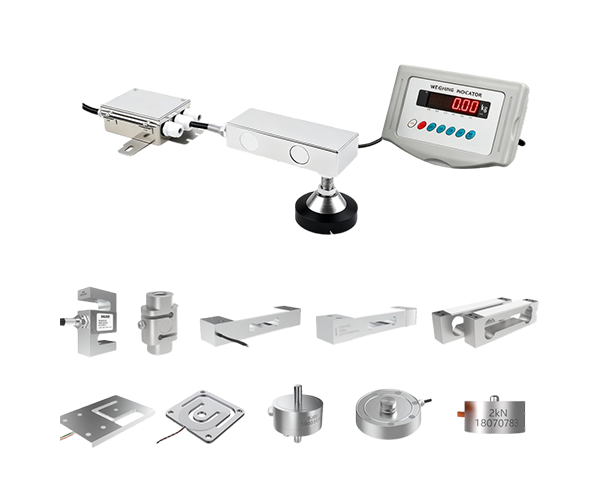
Load cells are critical components in industries ranging from manufacturing and construction to healthcare and aerospace. These devices convert force, weight, or pressure into measurable electrical signals, making them indispensable for precision measurements. However, selecting the right load cell for your application starts with understanding its data sheet—a document packed with technical specifications, performance metrics, and operational details.

Why This Matters: Choosing a load cell without reviewing its data sheet can lead to costly mistakes—insufficient capacity, poor accuracy, or environmental failure. A well-read data sheet ensures reliability, compliance, and long-term performance.

Key Sections of a Load Cell Data Sheet

1. Product Overview & Basic Information

Includes model number, product series, manufacturer details, certifications (ISO, NTEP, CE), and physical dimensions. Always verify these match your system requirements.

2. Electrical Specifications

  • Excitation Voltage: Usually 5–15V DC. Must match your power supply.
  • Output Signal: Typically in mV/V (e.g., 2mV/V). Higher output improves signal-to-noise ratio.
  • Input/Output Resistance: Ensures compatibility with amplifiers and conditioners.
  • Insulation Resistance: Critical for safety in humid or wet environments.

3. Mechanical Specifications

  • Rated Capacity: Maximum force the load cell can measure.
  • Safe Overload & Ultimate Overload: Temporary and permanent damage thresholds.
  • Accuracy Class: C3 (±0.02% FSO) for industrial use, C6 for high precision.
  • Non-Linearity & Hysteresis: Key indicators of measurement consistency.
  • Creep & Temperature Effects: Important for static or variable-temperature applications.

4. Environmental Ratings

IP Rating: Dust and water resistance (e.g., IP68 for submersion).
Vibration & Shock Resistance: Essential for mobile or heavy machinery applications.

5. Mounting & Installation Guidelines

Includes diagrams, torque values, cable requirements, and alignment instructions. Proper installation is critical to accuracy.

Step-by-Step: How to Analyze a Data Sheet

Step 1: Verify Rated Capacity – Choose a cell with capacity above your max load.
Step 2: Check Electrical Compatibility – Match excitation voltage and output signal to your system.
Step 3: Assess Accuracy Metrics – Ensure non-linearity, hysteresis, and class meet your needs.
Step 4: Evaluate Environmental Ratings – Select IP rating and temperature range for your operating conditions.
Step 5: Review Mounting Requirements – Confirm dimensions, hole patterns, and torque specs.

Common Mistakes to Avoid

  • Confusing rated capacity with safe overload.
  • Ignoring temperature drift in unconditioned environments.
  • Using cables longer than specified without signal boosters.
  • Skipping post-installation calibration.

Tools to Simplify Selection

  • Manufacturer comparison charts
  • Online load cell calculators
  • Direct technical support from suppliers like Galoce

Conclusion

Reading a load cell data sheet is a skill that ensures optimal performance, safety, and cost savings. By understanding electrical, mechanical, and environmental specs, you can select a load cell that meets your application’s demands. Always cross-reference with your requirements and consult with manufacturers when in doubt.


Need help selecting a load cell? Contact Galoce for expert support and a wide range of high-precision load cells for industrial applications.

© 2025 Galoce – All rights reserved. This guide is for educational and professional reference. Specifications may vary by product and manufacturer.

HOT keyword:
Recommend View More
TIME 2026.01.05

How to Read a Load Cell Data Sheet

Learn how to read and interpret a load cell manufacturer data sheet with this comprehensive guide. Understand key sections such as electrical specifications, mechanical properties, accuracy metrics, environmental ratings, and mounting guidelines. Discover practical steps for analyzing a data sheet based on real-world application requirements, common mistakes to avoid, and useful tools to simplify the selection process. Master data sheet literacy to ensure you choose the right load cell for your industry needs—whether for weighing systems, testing equipment, or harsh operational environments.

TIME 2025.12.24

Quality Control in Load Cell Manufacturing:How We Ensure Precision|GALOCE

Discover how rigorous quality control ensures unparalleled precision and reliability in load cell manufacturing. This in-depth guide walks you through the 7 critical stages—from raw material inspection and precision machining to strain gauge bonding, calibration, and environmental testing—that make industrial-grade load cells accurate, durable, and safe for aerospace, medical, and manufacturing applications. Learn why choosing a manufacturer with certified QC processes is essential for trustworthy measurements.

TIME 2025.12.23

Load Cells in Modern Inventory Management Systems

029-81292510

info@galoce.com

Rm. 1208, Building B, Huixin IBC, No. 1 Zhang Bayi Road, High-tech Zone, Xi'an, Shaanxi, China

Copyright © Xi'an Gavin Electronic Technology Co., Ltd Site Map

Message Form