3‑Axis Force Sensor FAQ: What You Should Know Before Buying or Using One
TIME: 2026.04.30AUTHOR: Carol LiNUMBER OF VIEWS 591
3‑Axis Force Sensor FAQ: What You Should Know Before Buying or Using One | Galoce
Published on: | Author: Galoce Technical Support Team
You’ve heard that force sensors can give robots a sense of touch. But when you start looking at datasheets, terms like “1‑axis vs 3‑axis”, “Fx/Fy/Fz”, and “MEMS vs strain gauge” can be confusing. This FAQ is for small business owners, makers, and engineering newcomers who need practical answers – without deep physics or heavy math. We’ll cover the six most common questions, share a simple comparison table, and end with a checklist for first‑time buyers.
❓ Q1: What’s the difference between 1‑axis, 3‑axis, and 6‑axis force sensors?
1‑axis (single‑axis): Measures force in one direction only – for example, straight down (compression) or straight up (tension). Think of a bathroom scale. It’s simple and affordable.
3‑axis: Measures forces in three perpendicular directions – left/right (Fx), forward/backward (Fy), and up/down (Fz). Perfect for robotic grippers, touch sensing, and assembly tasks where forces come from multiple directions.
6‑axis: Adds three torques (twisting forces) on top of the three forces – so it measures everything: pushes, pulls, and twists. Usually used in advanced robotics, surgical tools, and wind tunnels. Overkill for most simple applications.
💡 Simple rule: If you only care about weight or straight push/pull, 1‑axis is enough. If you need to know how an object is being pushed sideways or gripped, go for 3‑axis. If you also need twisting information (e.g., screw driving), choose 6‑axis.
❓ Q2: What do the numbers “Fx, Fy, Fz” mean?
These are shorthand for the three force directions, based on a standard coordinate system:
Fx: force along the X‑axis – typically side‑to‑side (left/right).
Fy: force along the Y‑axis – usually forward/backward.
Fz: force along the Z‑axis – always up/down (compression or tension).
Imagine a small cube floating in space. Push it left – that’s Fx. Pull it toward you – that’s Fy. Press it down – that’s Fz. A 3‑axis sensor measures all three at the same time and outputs separate signals for each.
🔧 Real‑world example: A robotic finger pressing a button feels mainly Fz (downward), but if the button is sticky, it may also feel Fx or Fy (sideways scraping). A 3‑axis sensor captures all three, helping the robot adjust.
❓ Q3: How accurate are they, and what affects accuracy?
Good 3‑axis force sensors achieve accuracy of ±0.5% to ±2% of full scale – enough for most robotic and industrial tasks. But accuracy can be affected by three common factors:
Temperature: Large temperature swings cause zero drift. Let the sensor warm up for 30 minutes before critical measurements, or choose a temperature‑compensated model.
Mounting: If the sensor isn’t perfectly aligned or the mounting surface isn’t flat, you’ll introduce side loads that cause measurement errors. Always mount on a rigid, flat surface.
Cable length & noise: Long cables can pick up electrical noise. Use shielded cables and keep them away from power lines.
💡 Practical advice: For most applications, factory calibration is enough. Re‑calibrate only if you suspect damage or once a year for critical work.
❓ Q4: How do I choose between strain‑gauge, MEMS, and other types?
Three main technologies dominate the market:
Strain gauge (metallic foil): The most common and mature. Accurate, robust, and reasonably priced. Best for industrial robots, test stands, and harsh environments. Slightly larger but very reliable.
MEMS (micro‑electromechanical systems): Tiny, cheap, and low‑power. Often found in consumer electronics (game controllers, smartphones). Less accurate than strain gauge and more sensitive to temperature, but perfect for low‑cost or miniature applications.
Optical (Fiber Bragg grating): Very high accuracy, immune to electromagnetic interference, but expensive. Used in aerospace and medical MRI‑compatible devices. Overkill for most first‑time buyers.
📌 Recommendation for most small businesses/makers: Start with a strain‑gauge based 3‑axis sensor. It offers the best balance of cost, accuracy, and durability.
❓ Q5: Installation tips – do I need special mounting?
Yes, proper mounting is critical. The sensor must be installed so that forces are applied exactly as intended. Here are the key rules:
Use a flat, rigid surface. Any bending or unevenness will pre‑stress the sensor and cause errors.
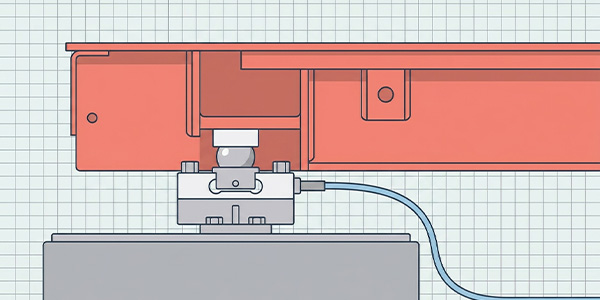
Avoid side loads. Use self‑aligning load buttons or spherical washers if the force direction isn’t perfectly straight.
Don’t weld near the sensor. Welding current can destroy the internal strain gauges. Disconnect the sensor before any welding on the structure.
Loosen transport screws. Many sensors come with shipping screws that lock the mechanism. Remove or loosen them after installation – otherwise the sensor won’t measure anything.
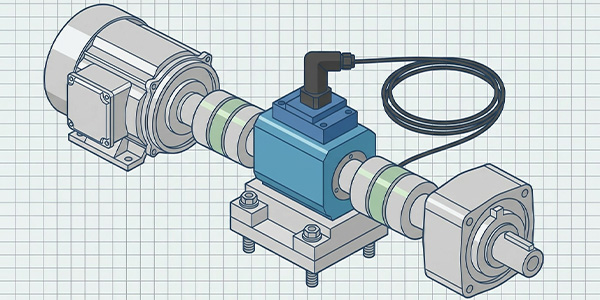
For dynamic applications (moving robots), use flexible couplings to avoid transmitting bending moments into the sensor.
💡 Quick check: After mounting, gently press the sensor by hand. The reading should change smoothly. If it’s stuck at zero, you probably forgot to remove the transport screws.
❓ Q6: What maintenance do they need?
Very little. 3‑axis force sensors are solid‑state devices – no moving parts to wear out. However, follow these simple steps:
Keep them clean. Dust and debris can affect mechanical response. Wipe gently with a soft cloth.
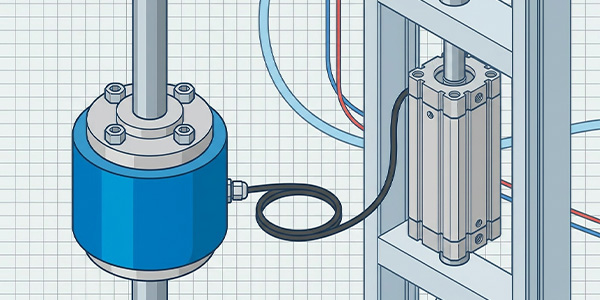
Avoid overload. Even a one‑time overload beyond the safe limit (typically 150% of rated capacity) can permanently damage the sensor. Use mechanical stops if needed.
Check cables. Inspect for cuts or pinched wires occasionally – damaged cables are a common failure point.
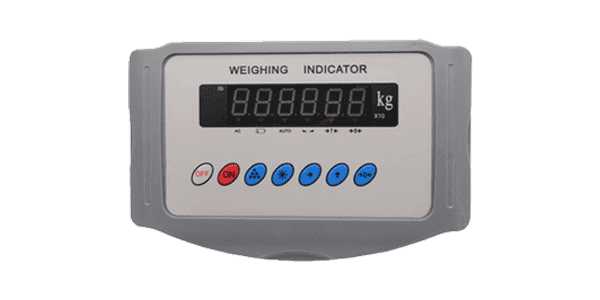
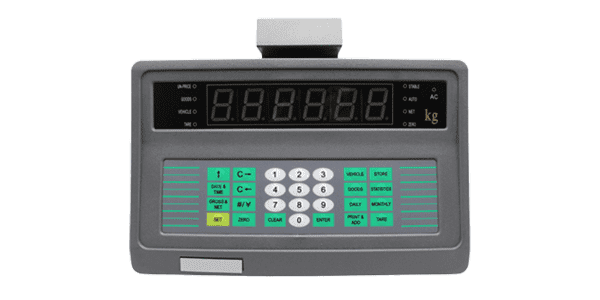
Re‑zero periodically. Ambient temperature changes can cause a small zero shift. Use the “tare” function on your indicator to reset zero.
✅ Good news: Under normal use, a quality force sensor will last for many years without any maintenance besides occasional cleaning and zeroing.
Quick comparison: 1‑axis vs 3‑axis vs 6‑axis
📏 1‑Axis
Measures: Force in one direction (e.g., Fz only). Typical price: $50–$200 Best for: Weighing scales, simple push/pull test stands, cost‑sensitive projects.
🔄 3‑Axis
Measures: Fx, Fy, Fz (three forces). Typical price: $300–$1500 Best for: Robotic grippers, assembly force monitoring, prosthetic hands, touch sensing.
🌀 6‑Axis
Measures: Three forces + three torques (Mx, My, Mz). Typical price: $2000–$10,000+ Best for: Advanced robot wrists, surgical robots, wind tunnels, research.
✅ Buyer’s checklist – before you order a 3‑axis force sensor
☐ Do you really need 3 axes? (If only one direction matters, a 1‑axis sensor is cheaper and simpler.)
☐ What force range do you need? (Pick a sensor where your typical force is 20–80% of its rated capacity.)
☐ What environment? (Indoor dry: alloy steel is fine. Humid/washdown: choose stainless steel with IP67/IP68.)
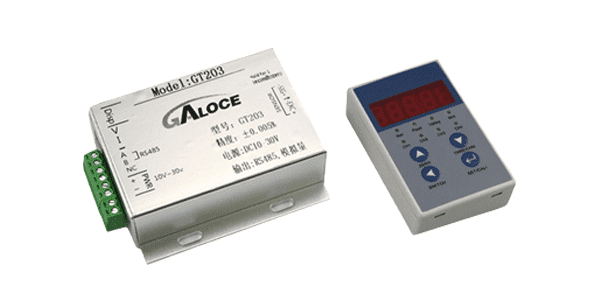
☐ What output signal? (Analog mV/V – requires amplifier. Digital (USB, CAN, RS‑485) – easier for computers.)
☐ Do you have a flat, rigid mounting surface? (If not, plan to machine an adapter plate.)
☐ Have you budgeted for mounting accessories? (Load buttons, cables, junction box.)
☐ Is the seller’s calibration traceable? (For legal or quality‑critical work, ask for a calibration certificate.)
💡 One more tip: If you’re a first‑time user, buy a sensor with an integrated USB or digital output. It saves you from dealing with analog amplifiers and simplifies data logging.
Where to learn more (without the math)
Force sensing can seem intimidating, but the basics are simple: measure pushes, pulls, and twists. Start with a 3‑axis sensor for most robotics or assembly tasks. Remember the key factors: capacity, accuracy, mounting, and environment. And don’t forget to (续) loosen the transport screws!
At Galoce, we offer a range of 3‑axis force sensors with clear documentation, plug‑and‑play USB options, and free technical support for first‑time buyers. Talk to a force sensing specialist
IP65, IP67 and IP68 are not levels on one scale. See the real IEC 60529 test conditions and learn which rating your humid, dusty or corrosive site needs.
Discover why GALOCE is the leading load cell manufacturer in China. Offering high-precision force sensors, 26-step quality audits, and global OEM/ODM engineering for US & UK industrial standards. Explore our brand guide.