A hive scale fails at the sensor more often than anywhere else in the system. Electronics can be swapped in a week, but a cell that saturates in July ruins a whole season of data.
This article covers sensor selection only, and it sets five cells against real hive weights. The wiring and signal values go to your circuit team at the end. ADC choice, excitation supply, filtering, telemetry and power stay on your side of the project.
01The Load Case: 27 kg Empty, 90 kg Full, and Never Centered
A hive is not a box of honey. A single deep box with bees, brood and some stores weighs 60 to 80 lb, or 27 to 36 kg. A two-story colony in a honey flow runs 150 to 200 lb, which is 68 to 91 kg. A three-story stack can pass 200 lb.
That weight is static, and it is eccentric. Bees cluster where the brood is, and boxes shift a few centimeters during an inspection. Wind pushes on one side of the stack, while the wood expands in August and shrinks in November.
Capacity follows one rule: rated capacity ≥ maximum hive weight × 1.5. For a two-story hive at 91 kg, that rule asks for 137 kg. The next size in the series is 200 kg.
Most capacity mismatches start with honey weight, because someone adds up 30 kg of honey and buys a 50 kg cell. The boxes, frames, wax and bees already sit on the platform before any nectar arrives. That is how a 50 kg sensor ends up at 180% of rating in its first July.
02Five Candidate Models, Mapped to Hive Configurations
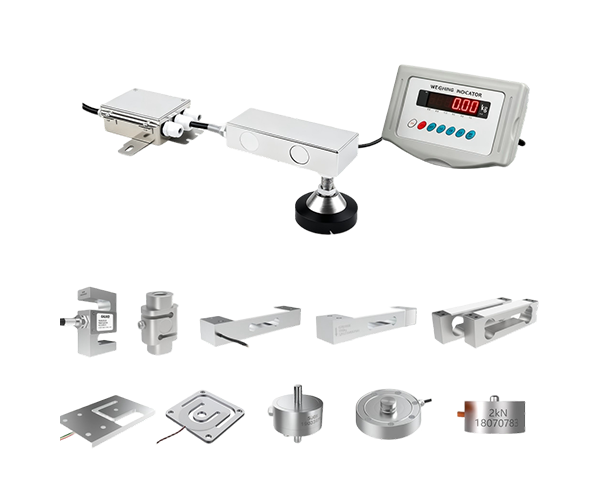
The table sets five cells against hive types. All five carry IP65, and none of them includes the electronics.
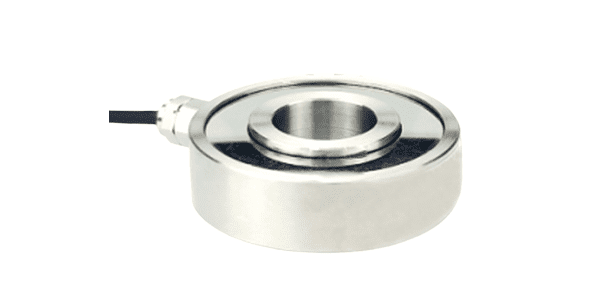
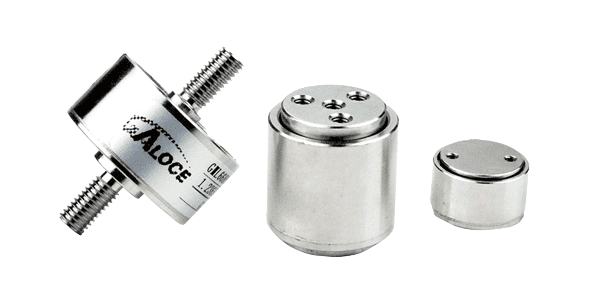
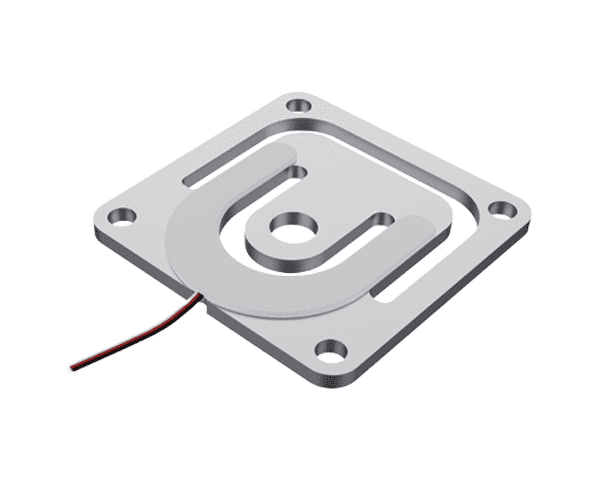
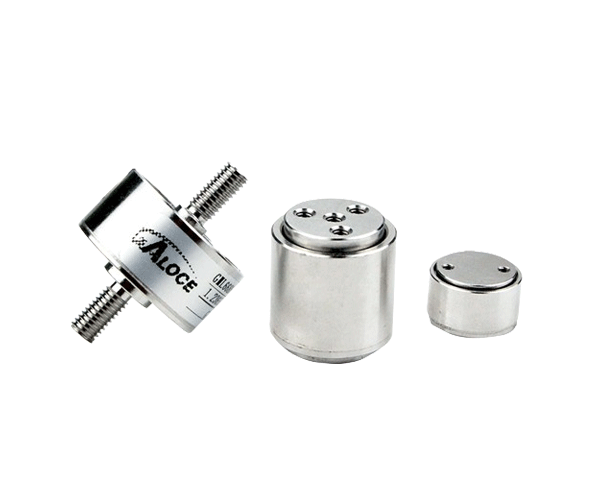
GML670 and GML670A. Both are 50 kg cells at ±0.05% F.S, which works out to ±25 g of comprehensive error. The body is 34×34 mm at 2.5 mm thick for the 50 kg range, in manganese steel with galvanized or electrophoresis coating. GML670 is a full-bridge cell with a center through-hole. GML670A is a half-bridge cell with a raised center load point.
Use them on nucleus boxes, single shallow boxes or small test plates. A 91 kg hive puts a 50 kg cell at 1.8 times its rating, so skip them for a full two-story hive.
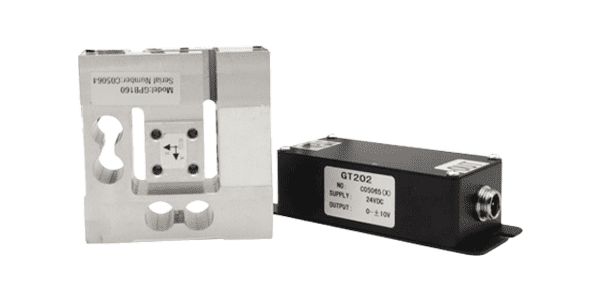
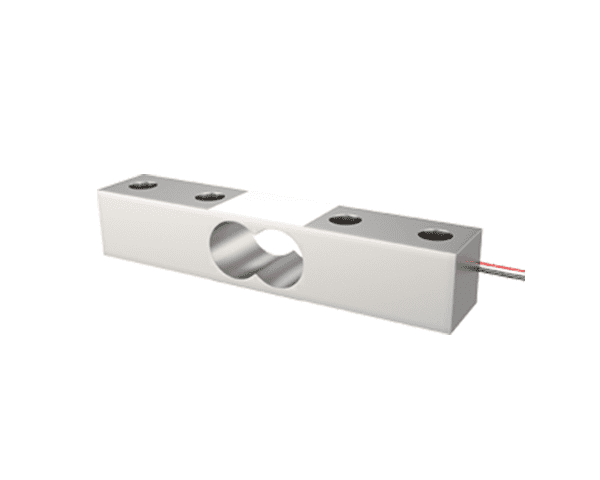
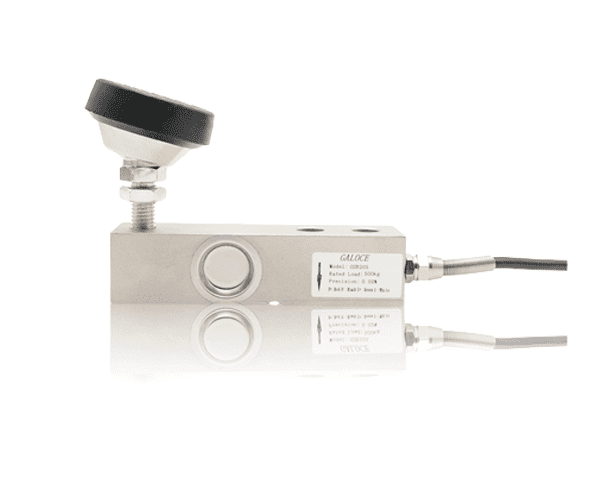
GPB100R. This is a 100 kg cell at ±0.02% F.S, so ±20 g of comprehensive error, and it holds accuracy class C3. The body is aluminium, 130×30×22 mm with four M6 holes, built around a 250×350 mm platform. One cell carries the whole load.
A single deep box of 27 to 36 kg leaves 2.8 to 3.7 times margin. At 91 kg the margin falls to 1.1 times, which is under the 1.5 rule.
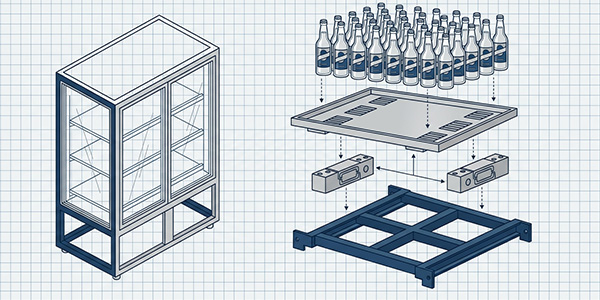
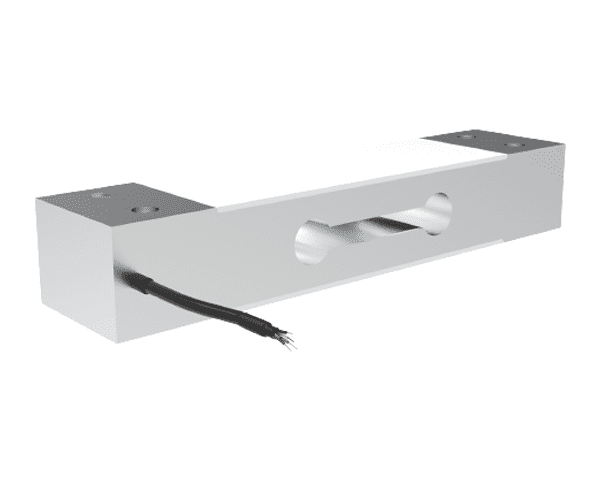
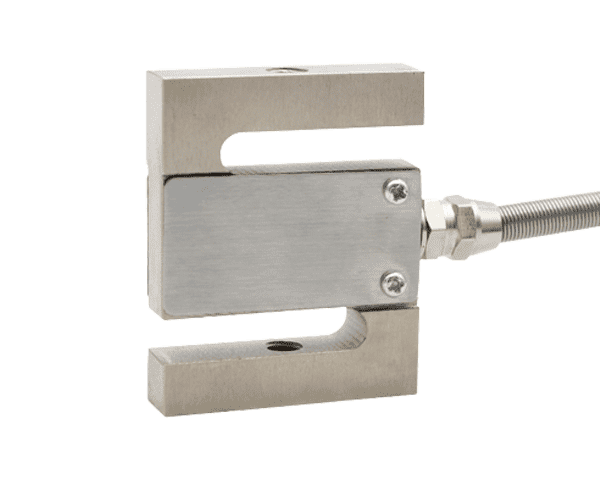
GPB144R. This is a 200 kg cell at ±0.02% F.S, so ±40 g of comprehensive error, also class C3. The body is 150×35×40 mm aluminium with eight M6 blind holes 20 mm deep, four on each of two faces. That layout lets the cell bolt between a base plate and a top plate, and it suits a 400×400 mm platform.
This is the main choice for two- and three-story hives, and at 91 kg it keeps 2.2 times margin.
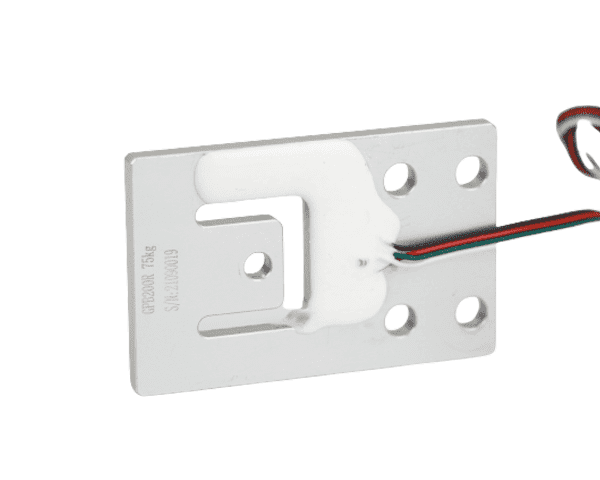
GPB200R. The planar beam cell comes in 30 kg and 75 kg versions at ±0.05% F.S. That is ±15 g and ±37.5 g. The plate is 70×39 mm at 3.5 mm thick for 30 kg, and 70×45 mm at 4.5 mm for 75 kg. Rated output is 1.0 mV/V on both, and the cells ship as four-piece matched sets.
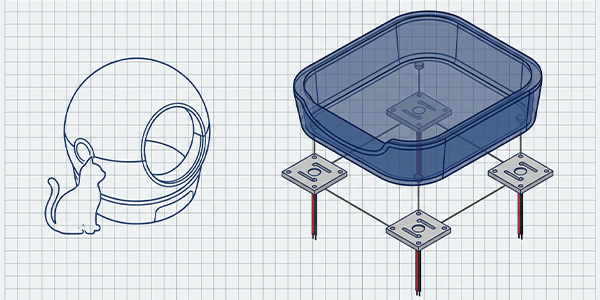
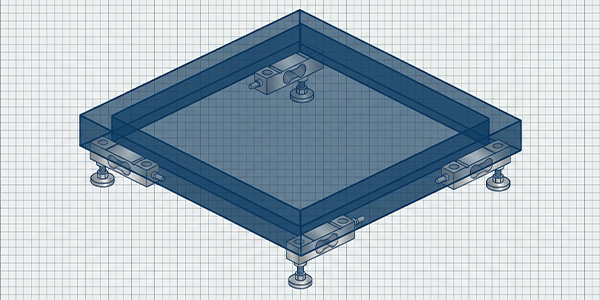
Four matched 75 kg cells give 300 kg of combined capacity, which is 3.3 times margin on a 91 kg hive. That headroom suits a four-point platform under a hive stand, with one cell per foot. It is 70 mm long and very low profile, so it suits a flat stand.
|
Model
|
Capacity
|
Comprehensive error
|
Body
|
Standard use
|
Typical fit
|
|
GML670
|
50 kg
|
±0.05% F.S = ±25 g
|
34×34×2.5 mm, manganese steel
|
full bridge, 4-wire
|
nucleus boxes, test plates
|
|
GML670A
|
50 kg
|
±0.05% F.S = ±25 g
|
34×34×2.5 mm, manganese steel
|
half bridge, 4 pcs per set
|
thin plates that need a fixed contact point
|
|
GPB100R
|
100 kg
|
±0.02% F.S = ±20 g, C3
|
130×30×22 mm, aluminium
|
250×350 mm platform, single cell
|
single deep box
|
|
GPB144R
|
200 kg
|
±0.02% F.S = ±40 g, C3
|
150×35×40 mm, aluminium
|
400×400 mm platform, single cell
|
two- and three-story hives
|
|
GPB200R
|
30 / 75 kg
|
±0.05% F.S = ±15 / ±37.5 g
|
70×39 or 70×45 mm, aluminium
|
4-piece matched set
|
four-point stand platform
|
Two stories and up: GPB144R. One box or a compact bench: GPB100R. Nucleus boxes and lab rigs: GML670 or GML670A. A four-foot stand: GPB200R in 75 kg.
03Mounting, Platform Size, and Half-Bridge Wiring
Platform size is a hard constraint, not a preference. A 10-frame Langstroth box measures about 505×413 mm outside, so a 250×350 mm platform sits fully inside that footprint. The box overhangs, and the cell takes the difference as an off-center load. The 400×400 mm platform overhangs too, but the lever arm is shorter.
An overhanging box also tips on soft ground, so check the off-center allowance before shrinking the platform.
Hole patterns decide how the customer machines the plates. GPB100R uses four M6 threads through the body. GPB144R uses eight M6 threads 20 mm deep, four on each of two faces. Blind holes at that depth mean the screws must not bottom out, so put the note on the drawing.
Bridge type turns selection into a wiring decision. GML670 is a four-wire full bridge, so one cell works alone. GML670A is a three-wire half bridge, and four pieces form one full bridge. The datasheet gives the rule: full-bridge sensitivity equals single-piece sensitivity × 2, and total range equals single range × 4. Four 50 kg half bridges therefore make a 200 kg bridge at about 1.8 mV/V.
The half-bridge set also carries a corner error of 1.0% F.S. On a 200 kg assembly that is 2 kg between corners, which is why the four cells ship as a matched set.
Contact geometry decides the long-term zero. GML670A loads the plate through a raised center point, so a thin or soft plate dents under 90 kg. The dent changes the load path, and the zero walks with it.
Material matters less than most buyers expect, and anodized aluminium resists oxalic acid vapor and ant activity. Manganese steel needs its coating checked at scratches and at the cable exit.
Ground movement is the second failure mode: frost lifts one corner of a stand, and rain washes soil from under another. The platform tilts, the load walks toward one edge, and the zero can move a kilogram across a winter. A concrete paver under each foot with adjustable leveling costs less than one service visit.
Three mounting rules cover most field failures. Support the full base, and never clamp the sides, because side preload reads as weight. Fit locating pins so the off-center position cannot change after transport.
Keep the cable exit pointing down, with a drip loop. IP65 holds only if the gland sits at its rated torque and the jacket is not stretched at the entry.
04Calibration and Acceptance Terms to Put in the PO
Calibration belongs at assembly, on your side, not at the sensor factory. Two points minimum: zero on the empty platform, span at a known mass near working load. Single-point calibration hides span error, which is the error that grows with the load.
These cells do not ship with an individual calibration record. That is normal for the range, and it changes what you can ask for in the purchase order.
What the supplier does provide is the datasheet specification, the CE declaration and the RoHS report, tied to a serial number. Put those on the PO as deliverables, and use the datasheet values as the acceptance basis.
Then set your own incoming inspection. Sample three cells per lot, load each at 50% and 100% of capacity, and record the readings in grams. A cell that misses the datasheet band twice goes back to the supplier.
Calibrate in the installed orientation. A cell trimmed flat and then bolted onto a sloped stand carries an off-center component the trim never saw.
Field rechecks need no hive lift: stack a known mass on the platform edge and compare readings. Once per season, before the main flow, is enough.
Set the reject line in grams: a zero shift of 50 g over a season means replacement, not a software correction. Software that cancels drift also cancels the slow real gains you are trying to read.
05What Your Circuit Team Needs From This Spec Sheet
Every number below comes from the datasheet. GPB100R and GPB144R take 5 to 12 VDC recommended, 3 to 15 VDC maximum, with 406±20 Ω input and 350±5 Ω output.
GPB200R takes 6 to 12 VDC recommended, with 1090±30 Ω input and 1000±10 Ω output. GML670 and GML670A run at 5 VDC recommended, 3 to 10 VDC maximum, with 1000 Ω on both sides.
Rated output is 2.0±0.15 mV/V on GPB144R, 2.0±0.2 mV/V on GPB100R, and 1.75±0.15 mV/V on a 50 kg GML670. Insulation resistance is 5000 MΩ or better on the GPB series and 2000 MΩ on the GML series.
The signal math follows. At 2.0 mV/V and 10 V excitation, full load gives 20 mV. On a 200 kg cell, 50 g produces about 5 µV. On a 100 kg cell, the same 50 g produces about 10 µV.
That figure restates the earlier trade-off: buying 200 kg of capacity for margin halves the signal per gram.
Cable runs are not interchangeable either. GPB144R uses a 2 m shielded cable at 6 mm diameter, and GPB100R a 400 mm lead at 3.8 mm. The GML670 series runs 0.8 mm at 210 or 450 mm.
Wiring codes follow one pattern on the GPB series: red exc+, black exc-, green sig+, white sig-. On the half-bridge GML670A, red is common, black is sig+ and white is sig-.
Lead with the bridge type, because a four-piece half-bridge set and a single full-bridge cell are not interchangeable at the connector.
Everything downstream is your customer's design, so ADC resolution, filter, sample window and telemetry are theirs to choose. This selection covers the sensor, its mounting, and the numbers on its label.
06FAQ
Which model fits a two-story hive?
GPB144R. A full two-story colony reaches 68 to 91 kg. The 200 kg rating keeps 2.2 times margin, and its zero drifts 40 g per 10 °C.
Is GPB100R enough for a full two-story hive?
Capacity is close, at 1.1 times margin, but its zero drifts 100 g per 10 °C. For a permanent outdoor scale the drift, not the capacity, rules it out.
Does -10 to +40 °C mean the cell stops working below -10 °C?
No. On the GPB series that is the compensated window, and the operating range is -20 to +60 °C. The GML670 series lists only -10 to +40 °C, which matters for a northern winter.
Can one GML670 be used alone?
Yes in full-bridge form. The GML670A half bridge needs four cells wired as one bridge, which makes a 200 kg bridge at about 1.8 mV/V.
Do you supply a calibration certificate with each cell?
No. The range ships to a datasheet specification with CE and RoHS declarations, and calibration is done at your assembly. Plan a two-point calibration and a sample-based incoming inspection.
Aluminium or manganese steel?
Aluminium on the GPB series, manganese steel with galvanized or electrophoresis coating on the GML670 series. Both carry IP65, so the choice turns on mounting and cost rather than on sealing.