Key Takeaway
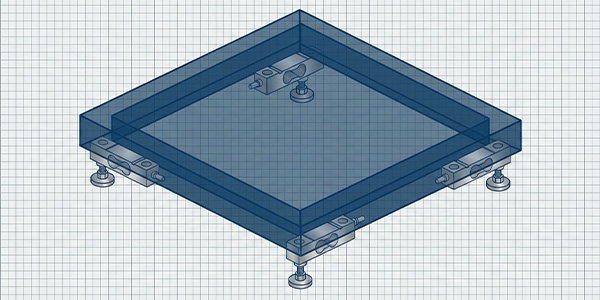
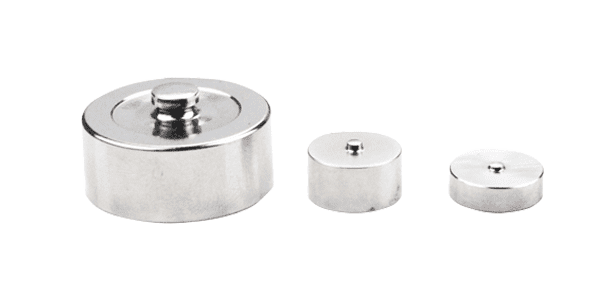
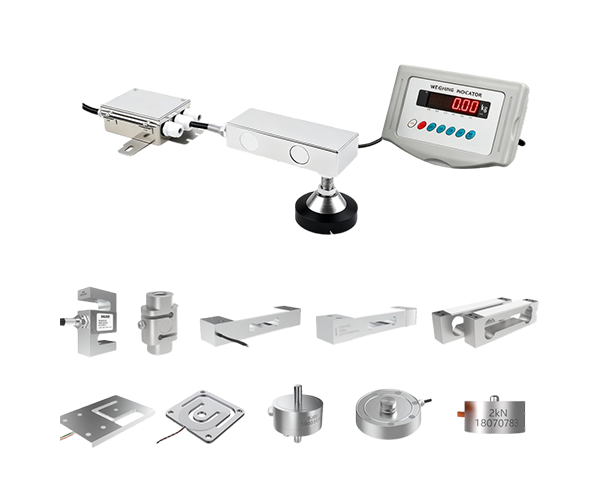
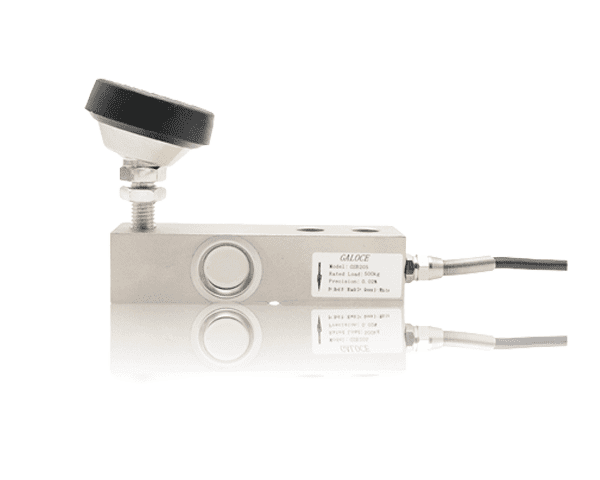
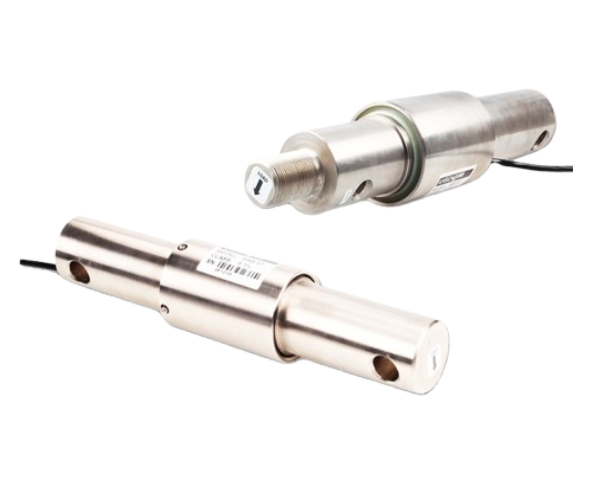
TMR (Total Mixed Ration) feed mixer weighing replaces manual feeding with precise, automated batch control of roughage, concentrate, and additives. A set of four bending beam load cells (typically 5–30 t capacity) is installed at the bottom of the mixer wagon to measure real-time ingredient weights, ensuring nutritional balance for every batch. GALOCE's GSB310 bending beam load cell (5–30 t, alloy steel, IP67, ±0.5% F.S.) is engineered specifically for the shock, vibration, and moisture of TMR feed mixer and agricultural weighing applications.
Industry Background
In the livestock industry, feed is a material consumed daily by farms, and controlling feed costs is a primary consideration. In traditional farming, manual feeding cannot control the amount of feed accurately — leading not only to feed waste but also failing to achieve nutritional balance. This results in decreased reproduction rates and yields, ultimately reducing farm profitability.
Total Mixed Ration (TMR) is a feeding method widely adopted in large-scale dairy and cattle farming. It involves mixing chopped roughage, concentrate feed, and additives (trace elements, minerals, vitamins) according to the nutritional requirements of dairy cows at different production stages. This technology simplifies labor procedures, mechanizes feed processing and feeding, saves labor and time, reduces feed costs, improves labor efficiency, and achieves the goal of scientific feeding.
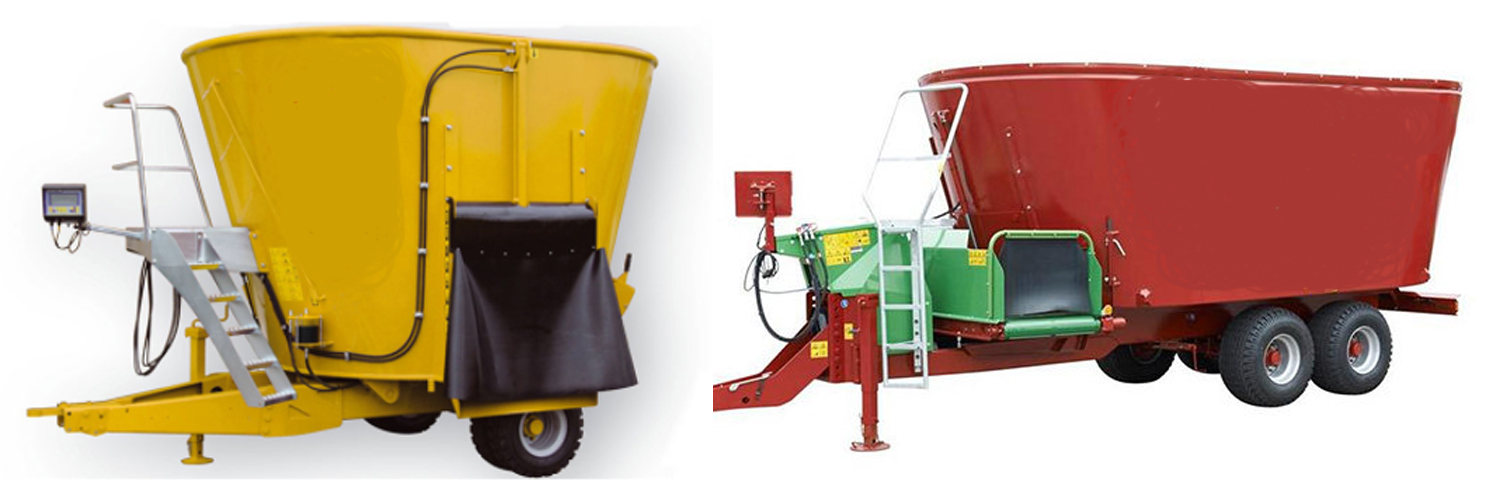
TMR Mixer Types and Weighing Requirements
TMR feed mixers can be divided into vertical and horizontal types. Vertical mixers are further classified into stationary and towable types, while horizontal mixers are classified into stationary and self-propelled types. Vertical mixers have a simpler structure and provide more accurate weighing — the entire process from mixing to discharging ensures high-quality feed, thereby increasing milk production and quality.
|
Mixer Type
|
Sub-Types
|
Weighing Challenge
|
Recommended Sensor
|
|
Vertical
|
Stationary, Towable
|
High vibration from auger; impact loads during transport
|
GSB310 bending beam (×4)
|
|
Horizontal
|
Stationary, Self-propelled
|
Lower vibration; space-constrained installation
|
GSB310 bending beam (×4)
|
|
Towable (Trailer)
|
Tractor-towed
|
Braking impact, road bumps, dynamic loading
|
GSB310 bending beam — shear beam NOT recommended (fracture risk)
|
Most farms in Europe and the United States use vertical mixers, as they provide more accurate weighing and better feed quality. For the Chinese market, vertical TMR mixers are also considered the most suitable choice.
Why Accurate Weighing Matters in TMR
The core value of TMR technology lies in precise nutritional formulation. Even a 5% deviation in concentrate ratio can significantly impact milk yield and animal health. The table below compares traditional feeding with TMR weighing-based feeding:
|
Factor
|
Traditional Manual Feeding
|
TMR with Weighing Sensors
|
|
Feed Accuracy
|
±15–20% (visual estimation)
|
±0.5% F.S. (load cell precision)
|
|
Nutritional Balance
|
Inconsistent; cows sort ingredients
|
Every bite contains uniform nutrition
|
|
Feed Waste
|
High (10–15% overfeeding)
|
Minimal (exact batch control)
|
|
Labor Cost
|
High (manual measurement & mixing)
|
Low (automated batching)
|
|
Data Tracking
|
Paper records, no real-time data
|
Digital logs, per-cow intake tracking
|
|
Milk Yield Impact
|
Lower yield, slower growth
|
5–15% increase in milk production
|
Weight-Based TMR Batching Principle
The TMR feed mixer truck, equipped with weight sensors, can accurately measure the weight ratio of roughage, concentrate feed, and trace elements. It also displays the total weight of the feed mixer, thus calculating the feed intake of each cow and accurately controlling their daily ration. The batching process follows a sequential loading principle:
Batching Sequence: Long roughage → Concentrate → Minerals/Additives → Mix → Discharge
Example: Target batch = 2,000 kg → Roughage 1,200 kg (60%) + Concentrate 700 kg (35%) + Additives 100 kg (5%)
Each ingredient is loaded until the load cell system reaches the preset target weight, at which point the loading conveyor automatically stops. The mixing auger then blends the batch for a programmed duration (typically 3–8 minutes) before discharge. This ensures every cow receives a nutritionally uniform ration at every feeding.
System Architecture
A complete TMR feed mixer weighing system consists of the following layers:
|
Layer
|
Component
|
Function
|
|
Sensing
|
GSB310 Bending Beam Load Cell (×4)
|
Installed at the bottom of the mixer wagon; supports the entire carriage weight; converts load to mV signal
|
|
Junction
|
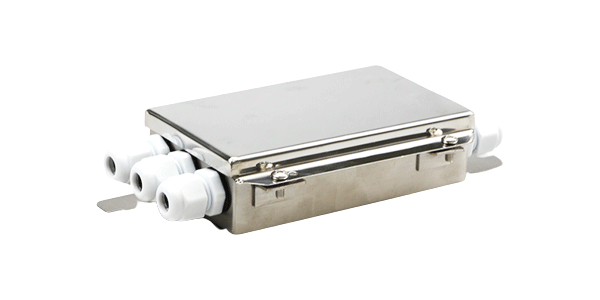
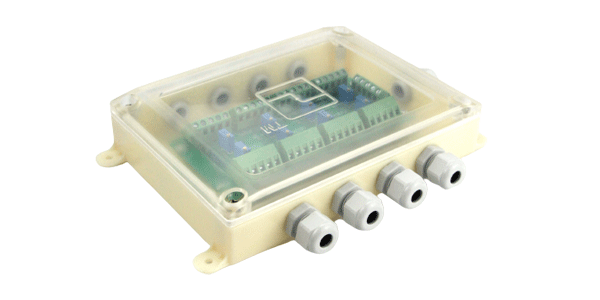
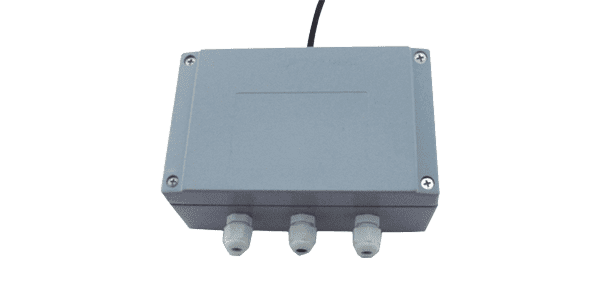
Junction Box (4-channel summing)
|
Combines signals from 4 load cells; provides trim pots for corner adjustment
|
|
Signal Conditioning
|
Weight Indicator / Transmitter
|
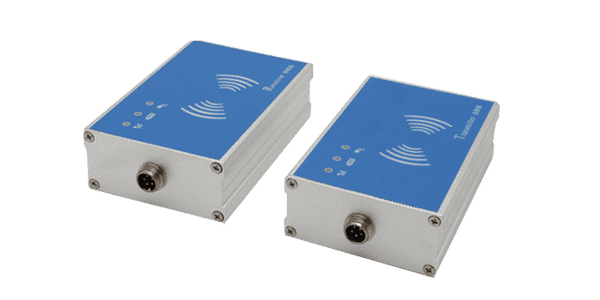
Amplifies mV signal to digital weight; displays real-time batch weight; triggers relay outputs
|
|
Control
|
PLC / Batch Controller
|
Manages ingredient loading sequence; auto-stops at target weight; controls auger mixing time
|
|
Display & Logging
|
HMI Touch Screen
|
Recipe management, batch history, per-cow intake records, export to farm management software
|
|
Communication
|
RS485 / Modbus RTU
|
Transmits weight data to farm ERP, feed management software, and cloud platforms
|
GALOCE supplies the GSB310 load cell and junction box components. The weight indicator, PLC controller, and HMI are typically designed by the TMR mixer manufacturer according to their platform requirements.
Recommended Load Cell: GSB310 Bending Beam
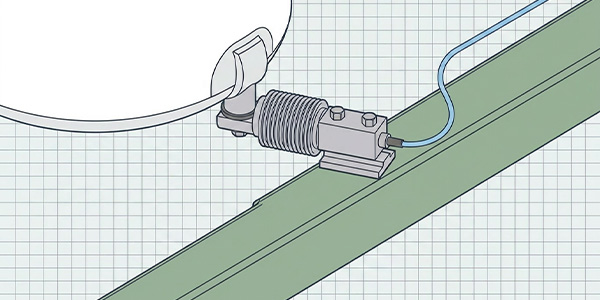
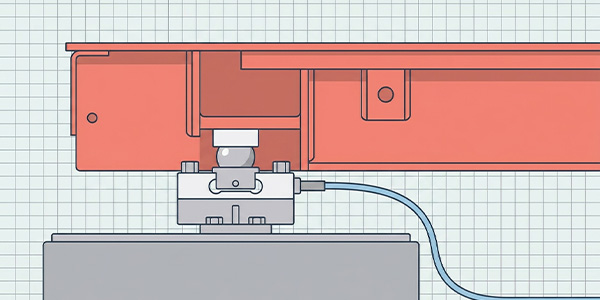
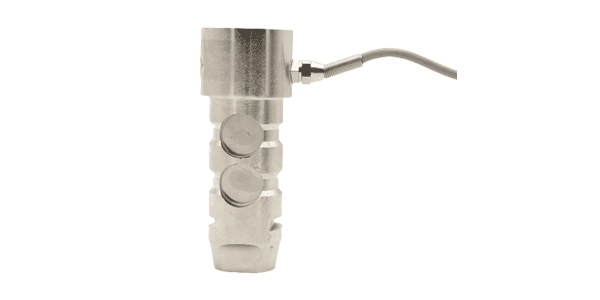
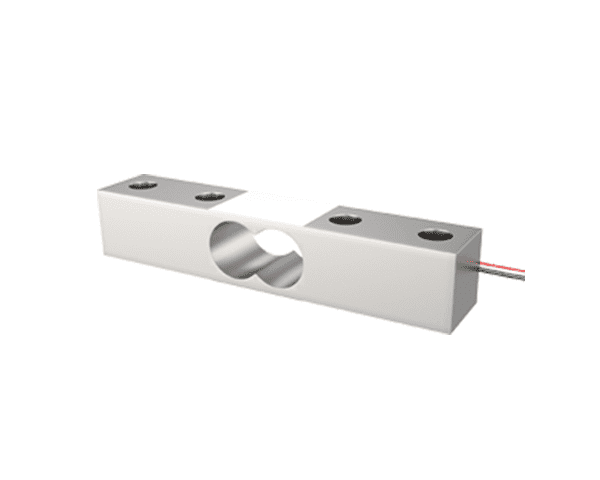
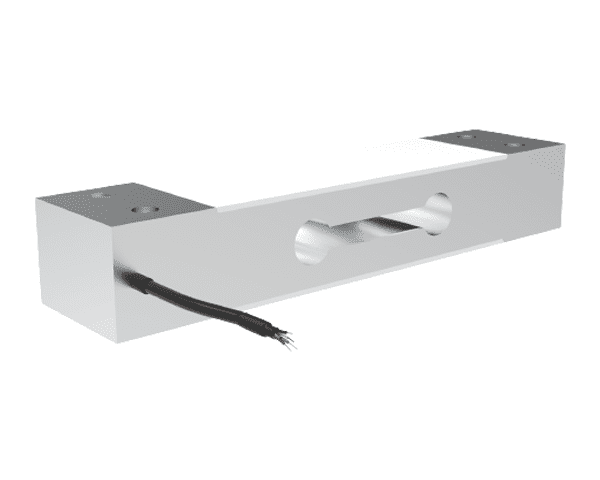
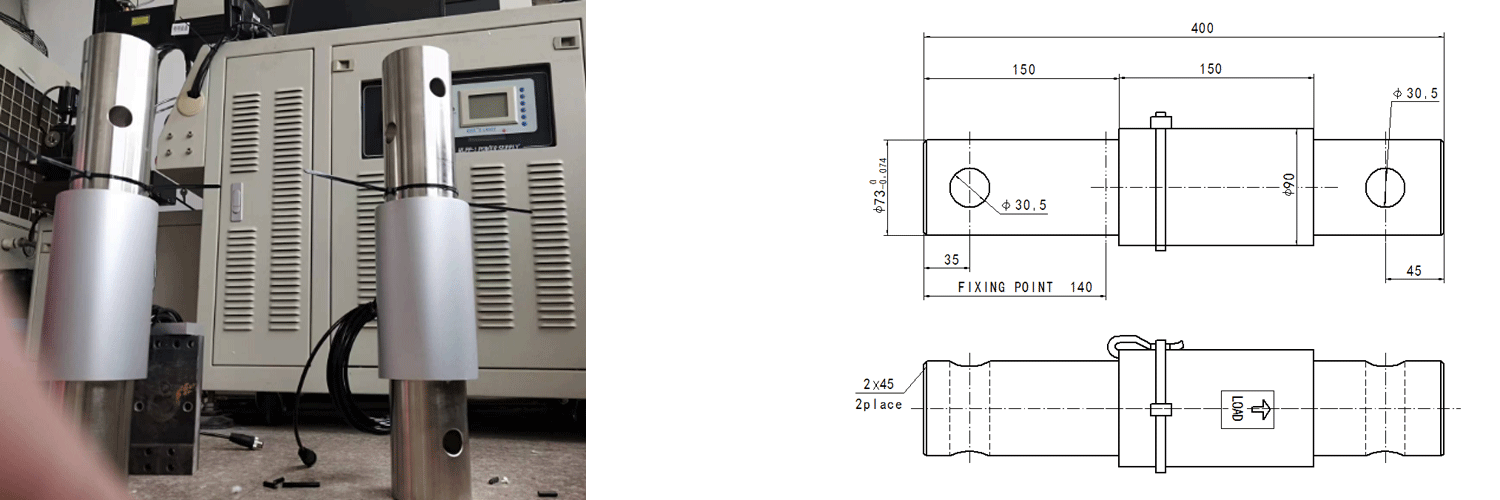
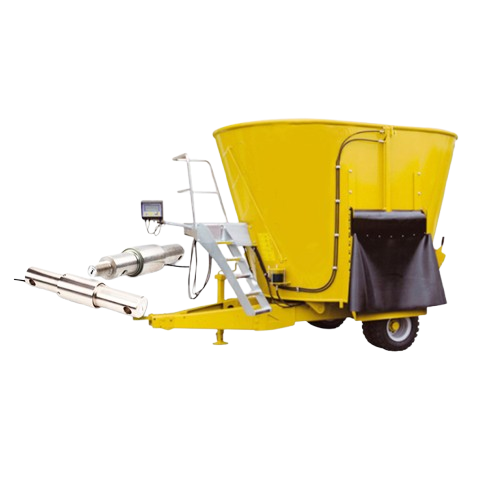
The dedicated weight sensor for TMR feed mixer trucks adopts a bending beam structure with an accuracy of ±0.5% F.S. It is made of alloy steel and used in sets of four. It is installed at the bottom of the feed truck carriage, with one end fixed to the carriage and the other end fixed to the vehicle axle beam.
Considering the impact from braking and bumps during transportation, shear beam structures are generally not used in towable mixer trucks, as the elastic body of the shear beam is prone to fracture under impact. Therefore, towable mixer trucks adopt the GSB310's solid and durable round bar bending beam structure.
|
Parameter
|
GSB310 Specification
|
|
Product Type
|
Bending Beam Load Cell (round bar structure)
|
|
Capacity Range
|
5 t, 10 t, 15 t, 20 t, 30 t (customizable)
|
|
Accuracy (Comprehensive Error)
|
±0.5% F.S.
|
|
Material
|
Alloy steel (stainless steel optional)
|
|
Protection Class
|
IP67 (dust-tight, waterproof)
|
|
Excitation Voltage
|
5–12 V DC
|
|
Structure
|
Round bar bending beam — high shock & fatigue resistance
|
|
Installation
|
Set of 4 units; one end fixed to carriage, other end to axle beam
|
|
Key Advantage
|
Resists braking impact & road vibration; will not fracture under dynamic loads (unlike shear beam)
|
|
Applications
|
TMR feed mixers, grain cart scales, mixer wagons, agricultural silos
|
|
Product Page
|
View GSB310 Details →
|
Product Card
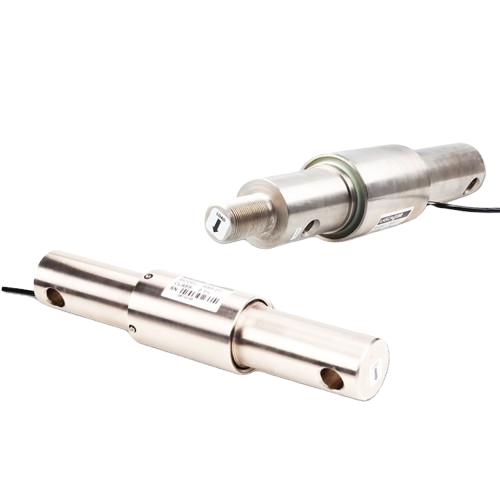
GSB310 Bending Beam Load Cell
Range: 5–30 t | Accuracy: ±0.5% F.S. | Alloy Steel | IP67 | Excitation: 5–12 V DC
Ideal for: TMR feed mixers, grain cart scales, mixer wagons, and heavy-duty agricultural batching systems. Round bar bending beam structure resists shock, vibration, and fatigue in harsh farming environments.
View Full Specifications →
Why Bending Beam, Not Shear Beam?
A critical design decision in TMR mixer weighing is the choice between bending beam and shear beam structures. For towable mixer trucks that travel on roads, the bending beam is strongly preferred:
|
Comparison
|
Bending Beam (GSB310)
|
Shear Beam
|
|
Structure
|
Solid round bar — robust, uniform stress distribution
|
Machined web with strain gauge holes — stress concentration points
|
|
Shock Resistance
|
High — solid body absorbs impact energy
|
Low — elastic body prone to fracture under braking impact
|
|
Fatigue Life
|
Excellent — alloy steel round bar resists cyclic loading
|
Moderate — machined stress risers limit cycle count
|
|
Best For
|
Towable TMR mixers, mobile weighing, dynamic loading
|
Stationary silos, platform scales (no transport impact)
|
Installation and Wiring Guide
Mechanical Installation
-
Sensor position: Install 4 × GSB310 load cells at the four corners of the mixer wagon bottom. One end of each sensor is fixed to the carriage frame, and the other end is fixed to the vehicle axle beam or chassis.
-
Load direction: Ensure each load cell is loaded in the correct bending direction (vertical downward). Misalignment will cause measurement error and potential damage.
-
Clearance & leveling: Verify that the wagon is level when empty. All four sensors should share the load equally. Use shims to level the installation if necessary.
-
Vibration isolation: Install rubber dampers or shock absorbers between the sensor and mounting surfaces to filter high-frequency vibration from the mixing auger and road travel.
-
Cable protection: Route sensor cables along the chassis frame using protective conduits. Avoid areas exposed to moving parts, heat sources, or direct moisture spray. Use strain-relief clips at connector points.
-
Overload protection: Install mechanical stops or limiters to prevent sensor overload during loading of heavy roughage bales or when the wagon is lifted for maintenance.
Wiring Connections (4-Wire, 4-Cell Summing)
Each GSB310 uses a 4-wire full-bridge configuration. Four load cells are connected to a junction box for signal summing. The standard color code is:
|
Wire Color
|
Function
|
Junction Box Terminal
|
|
Red
|
Excitation + (E+)
|
E+ bus (all 4 cells parallel)
|
|
Black
|
Excitation − (E−)
|
E− bus (all 4 cells parallel)
|
|
Green
|
Signal + (S+)
|
S+ bus (via trim pot for corner adjustment)
|
|
White
|
Signal − (S−)
|
S− bus (all 4 cells parallel)
|
The junction box sums the four cell signals into a single output, which is then connected to the weight indicator. Trim potentiometers in the junction box allow corner adjustment so that the same weight placed over any of the four sensors produces the same reading.
Calibration and Maintenance
-
Zero calibration: With the mixer wagon empty and parked on level ground, zero the weight indicator. This establishes the baseline (dead weight of the wagon) that is subtracted from all readings.
-
Span calibration: Place a certified test weight (e.g., 500 kg or 1,000 kg) at the center of the wagon. Verify the displayed weight matches within ±0.5%. Adjust the gain in the indicator if necessary.
-
Corner adjustment: Place the same test weight directly above each of the four load cells in turn. Adjust the trim pot in the junction box for each corner until all four readings match within ±0.1%.
-
Recipe setup: Program the target weights for each ingredient (roughage, concentrate, additives) into the batch controller. Set tolerances (e.g., ±2% per ingredient) for automatic loading control.
-
Periodic inspection: Check cable insulation, junction box sealing, and mounting bolts every 3 months. Re-verify calibration every 6 months or after any significant impact event (e.g., collision, heavy bale drop).
-
Winter maintenance: In freezing conditions, ensure the junction box is sealed against moisture ingress. Condensation and ice formation can cause signal drift. Use IP67-rated enclosures and desiccant packs.
Case Study: TMR Feed Mixer Weighing Solution
A U.S. dairy farm with 500-head milking cows upgraded their traditional feed mixer truck with a GALOCE weighing system. Four GSB310 bending beam load cells (10 t each) were installed at the bottom of the mixer wagon, connected through a 4-channel junction box to a smart weight indicator with batch control functionality.
Before the upgrade, the farm relied on visual estimation for ingredient loading, resulting in ±15% feed ratio deviation and significant waste. After installing the GSB310 weighing system, the farm achieved ±0.5% batch accuracy, reduced feed waste by 12%, and observed a 8% increase in average daily milk yield over 3 months — all while reducing labor hours by 2 hours per day.
FAQ
Why use 4 load cells instead of 1 or 2?
A TMR mixer wagon is a large, heavy structure with unevenly distributed loads (roughage bales, liquid additives). Four load cells at the four corners provide full support, distribute the weight evenly, and enable accurate measurement regardless of where the load is positioned inside the wagon. Using fewer sensors would create structural imbalance and inaccurate readings.
Why is bending beam preferred over shear beam for towable mixers?
Towable TMR mixers experience significant impact forces from braking, acceleration, and road bumps. The shear beam's machined elastic body has stress concentration points that can fracture under these dynamic loads. The GSB310's solid round bar bending beam structure has no such stress risers, making it far more durable for mobile applications.
What capacity should I choose for my TMR mixer?
The total capacity of the 4-cell system should be at least 1.5× the maximum loaded weight of the mixer wagon (including the wagon's own weight). For example, if the wagon weighs 3 t empty and carries up to 8 t of feed (total 11 t), use 4 × 5 t cells (20 t total capacity). Common choices are 4 × 5 t for small mixers, 4 × 10 t for medium, and 4 × 15–30 t for large mixer wagons.
Can the GSB310 withstand outdoor farm environments?
Yes. The GSB310 is rated IP67, meaning it is dust-tight and can withstand temporary immersion in water. The alloy steel construction is treated for corrosion resistance. For environments with aggressive chemicals (e.g., silage acids, manure), stainless steel versions are available upon request.
How does the system handle dynamic weighing during transport?
For towable mixers that weigh while moving, the weight indicator applies digital filtering (moving average or Kalman filter) to smooth out vibration-induced signal noise. The system typically takes readings at 10–50 Hz and averages over 2–5 seconds to achieve stable weight display during transport.
Can the weighing data integrate with farm management software?
Yes. The weight indicator outputs data via RS485 (Modbus RTU) protocol, which can connect to PLCs, farm ERP systems, and cloud-based feed management platforms. This enables recipe management, batch history tracking, per-cow feed intake analysis, and automatic report generation.
Related Topics