Torque vs. Power: What’s the Difference and Why Does It Matter?
TIME: 2026.05.25AUTHOR: Carol LiNUMBER OF VIEWS 787
Torque vs. Power: What’s the Difference and Why Does It Matter? | Galoce
Published on: | Author: Galoce Engineering Team
Every car fan has argued about torque vs. horsepower. Fitness enthusiasts see “watts” on their exercise bikes. Tool users feel the difference between a high‑torque drill and a high‑speed rotary tool. So what’s the real difference? In simple terms: torque is how hard you twist; power is how fast you can do that twisting repeatedly. This guide explains both concepts with everyday analogies, car examples, and real‑world applications – no math degree required.
⚡ Twisting hard vs. twisting fast
Imagine you have a stubborn jar lid.
Torque is how hard you twist. If you apply a lot of force, you’re using high torque – even if the lid barely moves.
Power is how many times you can twist that lid in one second while still applying force. If you twist rapidly, you’re generating high power – even if each twist isn’t very strong.
Another analogy: pushing a car. Torque is how hard you push. Power is how fast you can push the car down the street while maintaining that push.
In technical terms: torque is a twisting force (measured in N·m or lb‑ft). Power is the rate at which work is done (measured in watts or horsepower). You can have high torque without high power (think of a slow, strong wrestler), and you can have high power without high torque (think of a fast, light punch).
🚗 Car example: diesel vs. race engine
🛻 Diesel truck engine
High torque, lower power (at high rpm).
A diesel engine produces enormous torque at low revolutions – perfect for towing a trailer or climbing a hill. But it can’t rev very high, so its peak power (horsepower) is modest. You feel the “grunt” when you step on the gas.
🏎️ Formula 1 race engine
High power (at high rpm), lower torque at low rpm.
An F1 engine spins up to 15,000 rpm. It produces less low‑end torque than a diesel, but because it can spin so fast, its power output is enormous. You have to rev it high to feel the acceleration – that’s why race cars scream at high rpms.
🚛 Real‑world takeaway: A diesel truck feels strong from idle – that’s torque. A sports car feels weak at low rpm but explosive at high rpm – that’s power. For everyday driving, torque makes you feel “pull”; power wins the race.
🔁 How torque and power are related (the speed factor)
Power = Torque × Rotational speed
(In words: power = how hard you twist × how fast you twist)
This simple relationship explains everything. If you double the speed (rpm) while keeping torque the same, power doubles. If you double torque while keeping speed the same, power also doubles. That’s why a high‑reving engine can produce high power even with modest torque.
Conversely, a very slow‑turning but extremely strong motor (like a winch) can have high torque but low power – it takes a long time to lift the load, but it can lift a very heavy load.
📊 How torque sensors help measure both
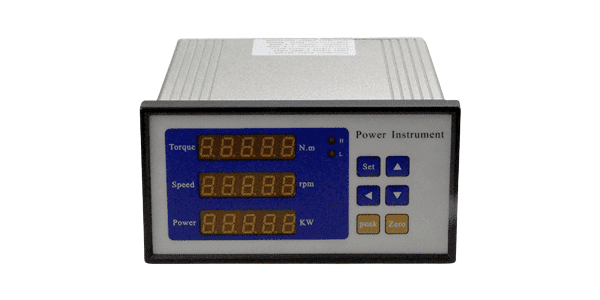
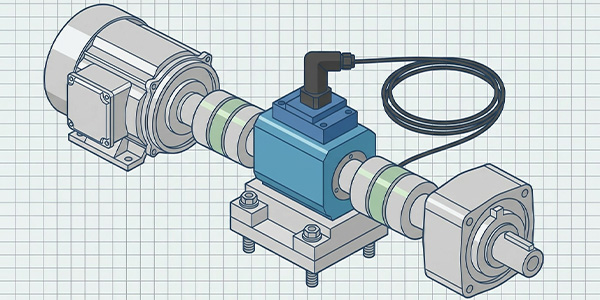
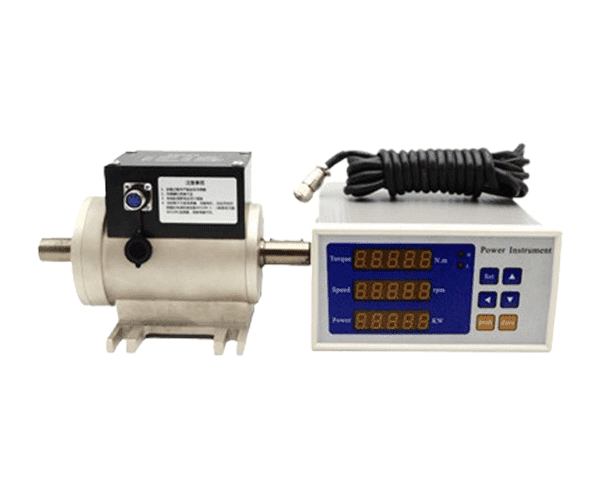
A torque sensor directly measures twisting force. If you also measure rotational speed (with an encoder or tachometer), a simple computer can multiply the two to give you power. That’s exactly what happens on:
Engine dynamometers (dynos): The torque sensor measures engine torque, a speed sensor measures rpm, and the computer calculates horsepower.
Exercise bikes: A torque sensor in the crank or flywheel measures how hard you pedal, a speed sensor measures cadence, and the bike displays your power in watts – the same unit used for lightbulbs! Higher watts mean you’re pedaling harder or faster (or both).
Electric drills: Some smart drills display torque and speed; they could calculate power, though most just show torque for control.
💡 Fun fact: One horsepower equals 746 watts. If you can sustain 200 watts on an exercise bike, you’re producing about 0.27 horsepower – about the same as a small microwave oven.
🔧 Real‑world examples (ebikes, drills, and fitness)
🚴 Electric bike
An ebike motor with high torque helps you start from a stop and climb hills. Power (watts) determines your top speed on flat ground. Many ebikes have a torque sensor that measures your pedal force and adjusts motor assistance – the harder you push, the more help you get.
🔩 Cordless drill
Drills are rated for torque (usually in N·m). High torque means it can drive large screws into wood. Power (watts) relates to speed; a higher‑power drill can also drill faster. The “clutch” on a drill clicks when torque reaches a set limit – that’s torque control in action.
🏋️♂️ Rowing machine
Like exercise bikes, rowing ergometers measure power (watts) by sensing the torque you apply to the flywheel and how fast it spins. Higher watts = more intense workout.
Conclusion: You need both, but torque is where it starts
Torque and power are partners. Without torque, you can’t create power. Without speed, torque alone doesn’t get you anywhere fast. For vehicles, torque gives you the feeling of being pushed into your seat; power determines how long that push lasts as speed increases.
Next time you see a car spec saying “300 lb‑ft of torque” and “200 hp”, you’ll know: that engine twists hard (torque) and can sustain that twisting at reasonably high rpm (power). When you pedal a stationary bike and see watts, remember: you’re producing power by applying torque to the pedals and rotating them quickly.
At Galoce, we make torque sensors that measure the “twisting hard” part – the foundation of every power calculation. Whether it’s for an engine test bench, an exercise bike, or a smart drill, our sensors give you the first half of the equation. Explore torque sensing solutions
IP65, IP67 and IP68 are not levels on one scale. See the real IEC 60529 test conditions and learn which rating your humid, dusty or corrosive site needs.
Discover why GALOCE is the leading load cell manufacturer in China. Offering high-precision force sensors, 26-step quality audits, and global OEM/ODM engineering for US & UK industrial standards. Explore our brand guide.