The Future of Torque Sensing: Smaller, Smarter, and Wireless | Galoce
TIME: 2026.05.25AUTHOR: Carol LiNUMBER OF VIEWS 500
The Future of Torque Sensing: Smaller, Smarter, and Wireless | Galoce
Published on: | Author: Galoce Innovation Lab
Torque sensors have been around for decades – bulky, wired, and often expensive. But a quiet revolution is underway. New technologies are making torque sensors wireless, tiny enough for a dental drill, smart enough to diagnose their own health, and cheap enough for hobbyist 3D printers. This article explores five major trends that will shape the next decade of torque sensing – and what they mean for engineers, doctors, makers, and everyday products.
📡 Trend 1: Wireless torque sensors
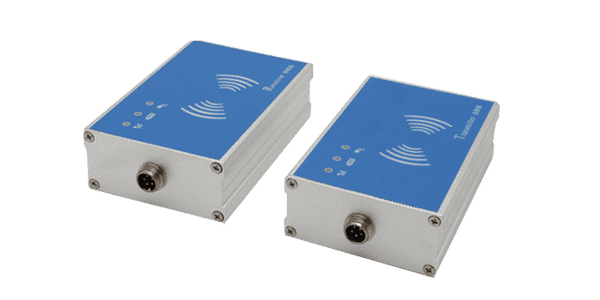
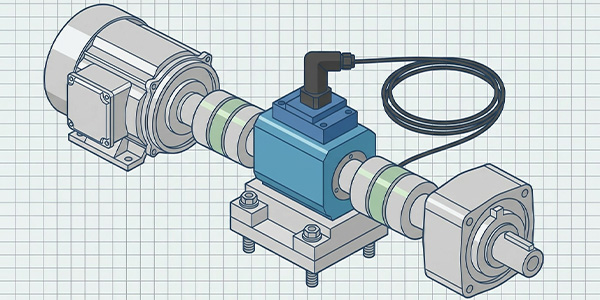
Traditional rotary torque sensors use slip rings or rotary transformers to send signals from a spinning shaft. They are expensive, require precise alignment, and eventually wear out. Wireless torque sensors replace all that with a tiny battery‑powered transmitter mounted on the shaft. Data is sent via Bluetooth or 2.4 GHz radio to a receiver.
Why it matters: You can retrofit existing machinery without dismantling. Install a wireless sensor on a conveyor shaft, a wind turbine, or a ship propeller – no cables to route, no slip rings to maintain. Expect wireless torque sensors to become standard for condition monitoring in factories.
Near‑future example: A technician clamps a wireless torque sensor onto a pump coupling, pairs it with a tablet, and reads real‑time torque – all in five minutes.
🔬 Trend 2: Miniaturisation – torque sensors smaller than a fingernail
MEMS (micro‑electromechanical systems) technology is now producing torque sensors that measure just a few millimetres across. These tiny sensors can be embedded into dental drills, surgical robots, and micro‑assembly tools.
Why it matters: Miniature torque sensors allow doctors to “feel” the force during delicate procedures. A dental implant tool with a torque sensor prevents over‑tightening that could crack a jawbone. A micro‑assembly robot can insert tiny gears without crushing them.
What’s coming: Disposable torque sensors for single‑use medical catheters, and torque‑sensitive tweezers for watchmakers and biologists.
🧠 Trend 3: Smart sensors with onboard processing
Today’s torque sensors just output a raw signal. Tomorrow’s sensors will have a tiny microcontroller that processes data on the sensor itself – detecting overloads, filtering noise, and even predicting wear.
Why it matters: A smart torque sensor can decide when to send an alert (“torque spike detected – possible jam”), reducing the load on central computers. It can also store calibration data, so you never need to re‑enter numbers after replacement.
Example: A smart torque sensor on a production line sends a “tool wear” warning before the tool fails, preventing downtime.
Why buy a separate torque sensor when the motor itself can sense its own torque? New electric motors – especially for robotics and ebikes – are being designed with integrated strain gauges or magnetic torque sensing directly inside the rotor or stator.
Why it matters: No extra space, no coupling, no alignment. The motor becomes the sensor. This simplifies designs and reduces cost for applications like collaborative robot joints and electric power steering.
Coming soon: “Smart motors” that output torque, speed, and temperature over a single cable – plug‑and‑play for robotic arms and ebikes.
💰 Trend 5: Lower cost – torque sensing for the masses
Thanks to MEMS and high‑volume manufacturing, basic torque sensors are becoming affordable for hobbyists and small workshops. Expect sub‑$50 torque sensors that plug into Arduino or Raspberry Pi.
Why it matters: Makers can build torque‑controlled 3D printers, robotic arms, or even smart bike pedals at home. Small businesses can add quality checks without a huge investment.
Near future: A $30 torque sensor for a DIY filament extruder, or a $100 torque‑sensitive drill attachment for precise screw driving.
✨ What this means for you
🔧 Easier retrofits
Wireless sensors mean you can add torque monitoring to old machines without rewiring or redesigning.
🩺 Safer medical devices
Tiny sensors enable force‑controlled surgical tools and better rehabilitation equipment.
🤖 Smarter robots
Integrated motor sensing and smart sensors make collaborative robots more responsive and safer.
🛠️ DIY torque control
Low‑cost sensors open up torque feedback for hobbyist 3D printers, CNC machines, and ebikes.
The next decade of torque sensing
We are moving from torque sensors as expensive, specialised components to ubiquitous, wireless, intelligent sensing. In ten years, many products will have built‑in torque feedback without you even noticing – your power drill will always stop at the perfect tightness, your electric toothbrush will never scrub too hard, and your ebike will feel more natural than ever.
At Galoce, we’re already working on wireless miniature torque sensors for medical and robotics applications. The future is small, smart, and connected – and torque sensing will be at the heart of it. Explore our next‑gen torque sensors
IP65, IP67 and IP68 are not levels on one scale. See the real IEC 60529 test conditions and learn which rating your humid, dusty or corrosive site needs.
Discover why GALOCE is the leading load cell manufacturer in China. Offering high-precision force sensors, 26-step quality audits, and global OEM/ODM engineering for US & UK industrial standards. Explore our brand guide.