Torque Sensors in Automotive: Steering, Engines, and Racing Pedals
TIME: 2026.03.23AUTHOR: Carol LiNUMBER OF VIEWS 725
Torque Sensors in Automotive: Steering, Engines & Racing Pedals | Galoce
Published on: March 23, 2026 | Author: Galoce Automotive Sensing Team
From the steering wheel in your hand to the engine delivering power and the pedals that demand precision on track — torque sensors have become the silent force driving modern automotive innovation. They enable electric power steering (EPS) feel, validate engine performance during development, and bring lifelike braking force to racing simulators. This guide explores how torque sensing technologies are reshaping vehicles and motorsports hardware.
1. Torque Sensors in Steering Systems: The Core of EPS
Modern vehicles rely on Electric Power Steering (EPS) to provide assist, fuel efficiency, and driver feel. At the heart of every EPS column or rack is a steering torque sensor that measures the driver's input torque.
🔧 How it works: A torsion bar twists slightly when the driver turns the wheel. The torque sensor (often based on magnetostrictive or contactless strain gauge technology) measures the relative angular displacement and converts it into an electrical signal. The EPS control unit then commands the motor to deliver precise assistance — less at high speed, more during parking maneuvers.
Safety & feel: Accurate torque sensing enables natural steering feel and active return-to-center functions.
Advanced driver assist: Lane-keeping systems use torque overlay signals to nudge the wheel.
Redundancy: Modern sensors often feature dual‑channel outputs for functional safety (ASIL D).
Leading automotive suppliers use non-contact torque sensors for durability, as they eliminate wear from brushes and offer lifetime reliability.
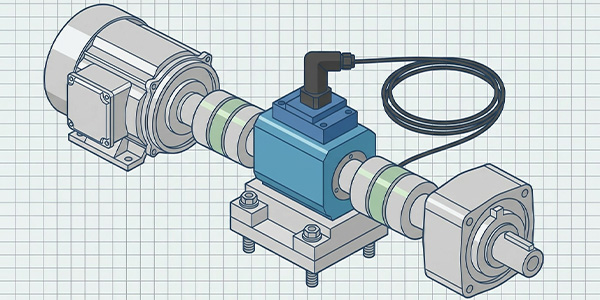
During engine development and transmission calibration, accurate torque data is indispensable. Rotary torque sensors (dynamometers) measure real‑time output from crankshafts, e‑motors, and gearboxes.
⚙️ Engine dynamometer (dyno) testing: High‑bandwidth, high‑speed torque sensors capture transient torque pulses, combustion irregularities, and efficiency maps. Both flange-type and shaft‑type sensors with telemetry or slip‑ring transmission are common.
EV motor testing: Electric motors require precise torque measurement to optimize torque ripple, thermal behavior, and overall drivetrain efficiency.
Transmission shift quality: Torque sensors monitor input/output shafts to refine shift smoothness and drivability.
On‑board vehicle torque monitoring: Some hybrid and performance vehicles integrate torque sensors for real‑time torque vectoring and traction control.
Typical capacities for powertrain testing range from 50 N·m to over 10,000 N·m with accuracies of ±0.05% to ±0.2% full scale.
Comparison: Key Torque Measurement Technologies in Powertrain
Technology
Advantages
Typical Automotive Application
Strain Gauge (Rotary Transformer)
High accuracy, robust, no contact wear
Engine dynos, e‑motor test benches
Surface Acoustic Wave (SAW)
Passive wireless, ideal for embedded systems
On‑shaft torque sensing in driveshafts
Magnetostrictive
Non‑contact, rugged, high overload capacity
Steering torque sensor, industrial EVs
3. Racing Pedals & Sim Racing Realism: Load Cells Take the Lead
In professional racing and high‑end simulators, pedal feel defines driver consistency. Load cell based pedals have become the gold standard because they measure force (pressure) rather than pedal position, mimicking hydraulic brake systems in real race cars.
🏎️ Why load cells dominate racing pedals:
- Muscle memory for pressure vs. position → more consistent braking
- Progressive elastomer stacks replicate real brake stiffness
- Direct force measurement eliminates potentiometer wear and hysteresis
- Used in Formula 1 simulators, GT academy rigs, and enthusiast direct‑drive pedal sets
Brake pedal: 50–200 kg load cell provides precise brake force signal to the game/simulator.
Throttle & clutch: Some advanced systems use load cells for ultra‑fine modulation and bite‑point feel.
Telemetry: Data logging of pedal forces helps drivers analyze braking technique.
For sim racing hardware, the shift from potentiometer‑based pedals to load cell brakes is widely considered the single biggest improvement in lap time consistency.
High accuracy (±0.05–0.2% FS), excellent linearity. Used in dynos, laboratory testing, and high‑end racing pedals. Rotary versions require non‑contact power/data coupling.
🔸 Magnetostrictive
Contactless, robust against shock/vibration. Common in EPS torque sensors and industrial vehicles. Measures torque via changes in magnetic permeability of the shaft.
🔹 SAW (Surface Acoustic Wave)
Passive, wireless, ideal for embedded rotating components. Emerging in automotive driveshaft torque monitoring for predictive maintenance and torque vectoring.
5. Key Performance Specifications for Automotive Torque Sensors
Parameter
Typical Range / Requirement
Application Relevance
Torque Capacity
±3 N·m (steering) to ±10,000 N·m (engine dyno)
Match to max expected load with safety margin
Accuracy (non‑linearity + hysteresis)
±0.1% to ±0.5% FS (industrial); ±0.05% for R&D
Determines measurement trust for calibration
Sampling Rate / Bandwidth
1 kHz – 10 kHz (dynamic testing)
Captures torque ripple, combustion pulses
Temperature Range
-40°C to +125°C (automotive grade)
Ensures stability under hood or outdoor conditions
Output Signal
Analog (mV/V, 0‑5V, 4‑20mA) or Digital (CAN, SENT)
CAN bus is standard for vehicle integration
📡 Digital interface trend: Modern automotive sensors increasingly use SENT (Single Edge Nibble Transmission) or CAN FD for high‑speed, noise‑immune torque data, essential for ADAS and real‑time torque vectoring.
6. Future Trends: Torque Sensing in ADAS & Electric Vehicles
Torque sensors are expanding beyond traditional roles into new mobility domains:
Drive‑by‑wire (steer‑by‑wire): No mechanical column; torque sensors at the steering wheel provide haptic feedback and driver intent to the actuators.
Torque vectoring & e‑axles: Real‑time torque monitoring on individual wheels improves traction, stability, and efficiency in EVs.
Predictive maintenance: Embedded wireless torque sensors in driveshafts can detect abnormal load patterns, enabling predictive fleet maintenance.
⚡ EV torque sensor opportunities: With electric motors delivering instant torque, precise torque sensing helps optimize regenerative braking, motor control, and overall vehicle dynamics calibration.
7. Conclusion: Precision That Drives Experience & Safety
From the effortless steering feel in your daily driver to the extreme realism in a racing simulator, torque sensors are the invisible enablers of modern driving. In steering systems they guarantee intuitive assistance and safety; in engine test cells they validate power and efficiency; in racing pedals they transform virtual driving into a true extension of the driver's skill.
As vehicles evolve toward electrification, automated driving, and immersive simulation, the demand for compact, reliable, and high‑bandwidth torque sensing will only accelerate. Choosing the right torque sensor — whether for EPS, powertrain R&D, or sim racing hardware — requires understanding both the mechanical environment and the required accuracy, interface, and safety level.
IP65, IP67 and IP68 are not levels on one scale. See the real IEC 60529 test conditions and learn which rating your humid, dusty or corrosive site needs.
Discover why GALOCE is the leading load cell manufacturer in China. Offering high-precision force sensors, 26-step quality audits, and global OEM/ODM engineering for US & UK industrial standards. Explore our brand guide.