Why Load Cell Selection Is Critical for Body Scales
In today’s health-conscious world, bathroom scales and body fat analyzers have evolved far beyond simple weight measurement tools. They have become the cornerstone of home health management, integrating advanced features like weight monitoring, body fat percentage analysis, and muscle mass calculation.
At the heart of these sophisticated devices lies a critical component: the precision load cell. The performance of these load cells directly determines the reliability of every measurement, ensuring the accuracy of body fat analysis algorithms and the long-term value of user health data.
Key Takeaway: A 0.1–0.2 kg error in raw weight can shift body fat percentage calculations by 1–2%. Choosing the right load cell is not optional — it is the foundation of accurate health data.
How Body Scales Use Load Cells
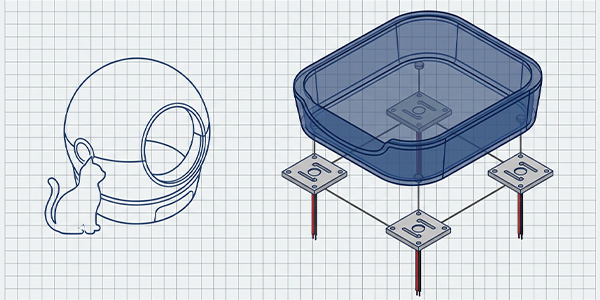
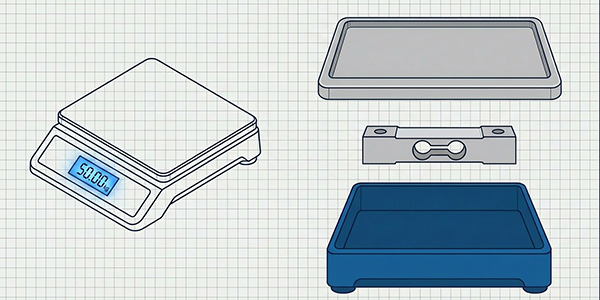
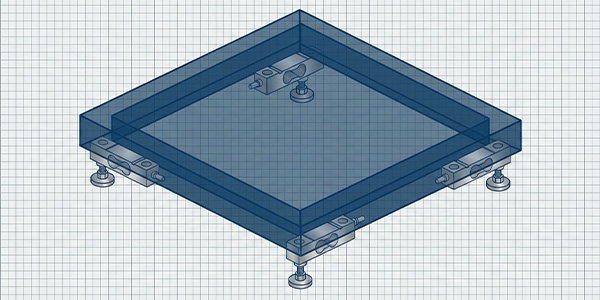
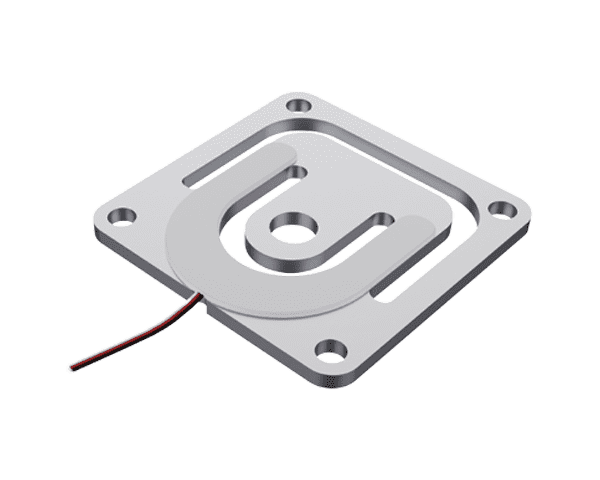
A typical smart body scale integrates four micro load cells, one mounted at each corner of the platform. When a user steps onto the scale, the four load cells deform slightly under the weight. Each cell converts that mechanical deformation into a proportional electrical (mV) signal, which the indicator sums and processes to display the body weight.
For body composition analysis, the scale typically uses Bioelectrical Impedance Analysis (BIA) in combination with the weight measured by the load cells. The accuracy of the body fat percentage, muscle mass, water content, and BMI calculations all depend on the precision and stability of the load cell output. Even a 0.1–0.2 kg error in raw weight can shift body fat percentage calculations by 1–2%, which is enough to mislead health-conscious users.
Smart body scales use four micro load cells at the corners for precise weight measurement
Key Selection Criteria for Body Scale Load Cells
Choosing the right load cell for a body scale requires balancing several factors:
|
Selection Factor
|
Recommended Specification
|
Why It Matters
|
|
Cell Capacity
|
50 kg per cell (4 cells = 200 kg total)
|
Supports 150–180 kg users with a safety margin
|
|
Accuracy Class
|
0.05% FS (C3) or better
|
Ensures 0.1 kg display resolution is reliable
|
|
Output Sensitivity
|
0.6 – 1.2 mV/V (matched across 4 cells)
|
Matched cells keep corner-error within spec
|
|
Sensor Material
|
Manganese steel (65Mn) or aluminum alloy
|
High fatigue life, stable over 1M+ load cycles
|
|
Protection Rating
|
IP65 (silicone rubber sealed)
|
Resists bathroom humidity and sweat
|
|
Cell Footprint
|
30×34 mm to 35×29 mm (low profile)
|
Fits inside a slim glass-platform housing
|
|
Operating Temp.
|
-10°C to +40°C
|
Indoor residential environments
|
Why Sensitivity Matching Matters
When four load cells are wired in parallel (or summed by the indicator), a mismatch in sensitivity between cells causes corner-load error: a 100 kg user standing near one corner may read 99.4 kg, but the same user near the opposite corner may read 100.6 kg. Selecting cells from the same production batch and ensuring the µV/V output differs by no more than 0.1 mV/V between cells eliminates this issue.
Recommended Micro Load Cells for Body Scales
GALOCE offers a family of micro load cells designed for body scale and body fat scale assemblies. All models use manganese steel construction with silicone sealing, and are factory-matched for parallel use:
|
Model
|
Range
|
Accuracy
|
Dimension
|
Sensitivity
|
|
GML670
|
50 kg
|
0.05%
|
34×34×2.5 mm
|
0.6 ± 0.1 mV/V
|
|
GML670A
|
50 kg
|
0.05%
|
30×34×2.5 mm
|
0.6 ± 0.1 mV/V
|
|
GML671A
|
50 kg
|
0.3%
|
30×25×2.5 mm
|
1.2 ± 0.15 mV/V
|
|
GML691A
|
50 kg
|
0.05%
|
35.2×29×2.0 mm
|
1.1 ± 0.15 mV/V
|
|
GML692
|
50 kg
|
0.3%
|
34×34×7.8 mm
|
1.0 ± 0.15 mV/V
|
|
GML694
|
50 kg
|
0.3%
|
28×28×3.2 mm
|
1.0 ± 0.15 mV/V
|
The GML670 and GML611 are the two flagship models for body scale applications. Both are factory-adjusted for corner-load performance, paired-tested, and supplied with matched sensitivity data so that four cells can be installed without further calibration in the field.
Featured: GML670 Micro Load Cell
-
● Material: High-grade manganese steel (65Mn) for maximum fatigue life
-
● Sealing: Silicone rubber sealed — IP65 rated for humid bathroom environments
-
● Precision: 0.05% FS accuracy for reliable 0.1 kg display resolution
-
● Design: Ultra-thin 2.5 mm profile fits inside slim glass-platform housings
-
● Calibration: Factory four-corner adjusted — install and go, no field trimming needed
-
● Range options: 5 kg – 200 kg (50 kg standard for body scales)
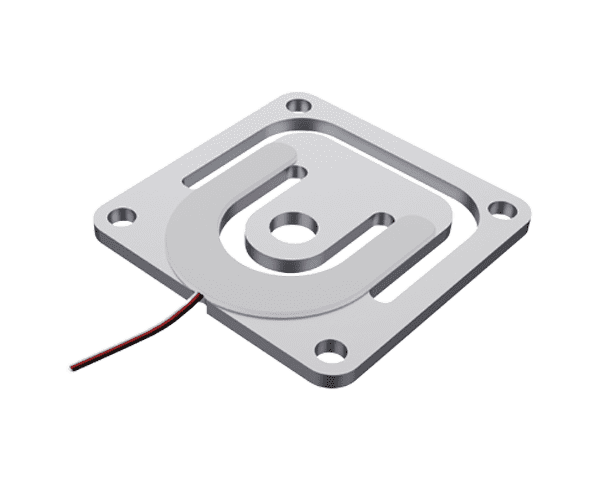
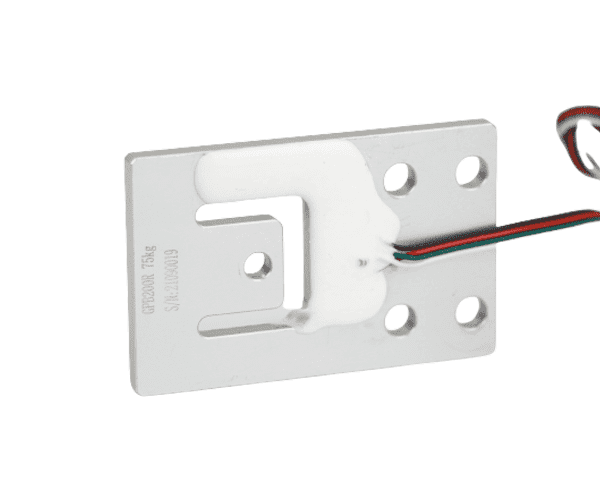
GML670 micro load cell — ultra-thin manganese steel construction, 34×34×2.5 mm
Body Scale Assembly: Wiring the Four Load Cells
The four load cells in a body scale are connected in a Wheatstone bridge summing configuration. Most body scale indicators provide four independent input channels and handle the summation automatically. The standard wiring colors are:
-
Excitation (+): Red — supply positive from indicator
-
Excitation (−): Black — supply ground from indicator
-
Signal (+): Green — positive measurement output
-
Signal (−): White — negative measurement output
For best results, keep cable lengths matched across all four cells. A length difference of more than 50 mm introduces a small but measurable offset. Use a junction board with individual trim potentiometers if you need to fine-tune the corner load after assembly.
Why Choose GALOCE Micro Load Cells
-
Unmatched Accuracy: Our micro load cells deliver precise, consistent readings, ensuring you can trust every number.
-
Enhanced Algorithms: Superior load cell performance enhances the accuracy of body fat analysis, providing deeper insights into your health.
-
Long-Term Reliability: Designed for durability, our load cells offer sustained performance over 1 million load cycles, making your health data tracking seamless over time.
-
Factory-Matched Sets: Cells are paired-tested so that all four corners of your scale track the same calibration curve, eliminating corner-load error out of the box.
Real Cases: Micro Load Cells in Smart Body Scales
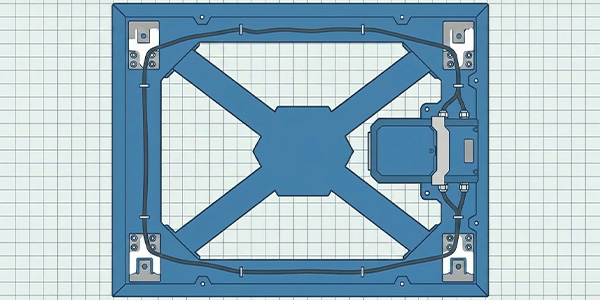
The image below shows a typical smart body scale platform with GML-series micro load cells installed. Each cell is mounted at one corner of the glass platform, wired to the indicator board in the center, and sealed against the humid bathroom environment. This configuration is the industry standard for 150–180 kg home bathroom scales with 0.1 kg display resolution and BIA-based body composition analysis.
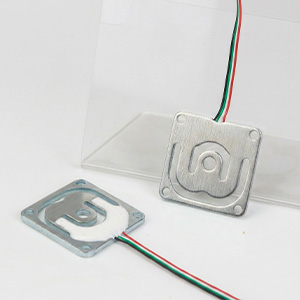
GML670 full bridge view — the standard configuration for four-corner body scale installations
Empower Your Health Journey with Precision You Can Trust
Upgrade your health management tools with load cells that don’t just measure—they empower. Experience the difference with our cutting-edge micro load cells, and take control of your health with confidence.
Precision load cells. Trusted Results. Healthier Futures.
Frequently Asked Questions
How many load cells are used in a body scale?
A standard bathroom or body fat scale uses four micro load cells, one at each corner of the platform. The four signals are summed to give a single weight reading that is independent of where the user stands on the platform.
What capacity load cell do I need for a 180 kg body scale?
Use four 50 kg cells in parallel. The total platform capacity is 200 kg, which gives a 200/180 = 1.11× safety margin—enough to absorb dynamic shock loads when a user steps on quickly, while keeping each cell operating in its linear range.
What is the typical sensitivity for a body scale load cell?
Most micro load cells for body scales output 0.6 – 1.2 mV/V. Lower sensitivity (0.6 mV/V) gives a longer battery life, while higher sensitivity (1.2 mV/V) gives a stronger signal-to-noise ratio. Match the sensitivity of all four cells within 0.1 mV/V to keep corner-load error below 0.1 kg.
Do I need to calibrate the load cells in a body scale?
Pre-matched micro load cells from the same batch (such as the GML670, GML670A, or GML611) usually need only a single-point calibration on the indicator. If cells are not factory-matched, you will need a four-corner calibration procedure with a known reference weight at each corner to compensate for sensitivity and offset differences.
What protection rating should body scale load cells have?
At least IP65 (dust-tight and protected against low-pressure water jets) is recommended. Bathroom scales are exposed to humidity, sweat, and the occasional spill. Silicone-rubber-sealed manganese steel cells (such as the GML series) easily meet this requirement.
Can the same load cell be used for both body weight and body fat analysis?
Yes. Body fat percentage is calculated by combining the weight from the load cell with bioelectrical impedance measured through metal electrode pads on the platform. The load cell only provides the weight signal; the body composition algorithm uses that weight as a reference. Accurate body fat analysis therefore starts with an accurate load cell.
Building a Smart Body Scale or Body Fat Analyzer?
Choose GML-series micro load cells — factory-matched, IP65 sealed, and proven in millions of body scales worldwide.