When Weighing Modules Meet AI: Three Game‑Changers for Smart Weighing Systems
TIME: 2026.04.13AUTHOR: Carol LiNUMBER OF VIEWS 642
When Weighing Modules Meet AI: Three Game‑Changers for Smart Weighing Systems | Galoce
Published on: | Author: Galoce AI & Industrial IoT Team
For decades, weighing modules were passive tools – converting force into a millivolt signal, nothing more. But the rise of artificial intelligence, edge computing, and ubiquitous connectivity is transforming them into intelligent data nodes. This shift is not incremental; it is foundational. In this article, we explore three game‑changing innovations: AI dynamic calibration, edge computing + 5G, and IoT‑enabled predictive maintenance. And we show you how these technologies converge in a real‑world unmanned truck scale system that delivers 300% efficiency gains, anti‑fraud protection, and near‑zero downtime.
1. Why Traditional Weighing Is No Longer Enough
Conventional weighing systems – even high‑accuracy ones – suffer from inherent limitations:
Static calibration only: Once calibrated, the system assumes constant environmental conditions. Temperature drift, vibration, and mechanical wear degrade accuracy over time.
Reactive maintenance: Failures are detected only after they cause downtime or inaccurate readings.
Isolated operation: Weighing data rarely integrates with higher‑level systems (ERP, MES) in real time.
Manual intervention: Truck scales require operators; checkweighers need periodic verification.
In an Industry 4.0 world where milliseconds and micrograms matter, these shortcomings are no longer acceptable. The solution lies in embedding intelligence directly into weighing modules.
2. The Vision: From Weighing Tool to Data Node
📡 The intelligent weighing module of the future:
Self‑calibrating and self‑diagnosing.
Capable of real‑time error compensation using on‑board AI models.
Connected via 5G to cloud analytics platforms.
Acting as a sensor hub for vibration, temperature, and load data.
This transformation turns weighing modules from passive components into active participants in the industrial data ecosystem. The result: higher uptime, lower total cost of ownership, and unprecedented process transparency.
3. Game‑Changer 1: AI Dynamic Calibration
Traditional load cell calibration is a snapshot in time. But real‑world conditions change – temperature fluctuates, vibration patterns shift, and mechanical structures settle. AI dynamic calibration uses deep learning models to continuously learn and compensate for these variations.
🧠 How it works:
During initial setup, the system is trained on data from various conditions (different temperatures, vibration frequencies, load cycles).
On‑board or edge AI models monitor real‑time sensor data (load, temperature, acceleration).
The model predicts and subtracts error components – e.g., thermal zero shift, vibration‑induced noise, creep.
Over time, the model updates itself using feedback from verification weights or downstream checks.
Measurable benefits:
Accuracy maintained within ±0.05% across wide temperature ranges (−10°C to +40°C).
Vibration immunity increased by 70% – ideal for dynamic checkweighing or mobile scales.
Calibration intervals extended from 12 months to 24+ months, reducing service costs.
📊 Field result: A food packaging line using AI dynamic calibration reduced false rejects by 55% and extended calibration cycles by 18 months, saving $45,000 annually in maintenance and product giveaway.
Traditional in‑motion weighing requires complex algorithms to compensate for vehicle dynamics. But edge computing combined with ultra‑low‑latency 5G changes the paradigm. Weight data can be processed locally on the weighing module’s microcontroller, then transmitted to the cloud in milliseconds.
⚡ Efficiency boost: 300% throughput increase
Unmanned weighbridge: from 30 seconds per truck (traditional) to 10 seconds – no stopping, no operator.
Conveyor belt scale: real‑time weight capture at speeds up to 5 m/s with ±0.2% accuracy.
Sorting systems: dynamic weight‑based sorting of parcels at 10,000+ units per hour.
5G enables remote configuration, firmware updates, and data streaming even from mobile weighing platforms (e.g., fork‑mounted scales). Edge computing ensures that critical decisions – such as rejecting an overweight package – happen locally, without relying on cloud latency.
📶 Technical note: Edge‑native weighing modules use ARM‑based processors with integrated AI accelerators (e.g., TensorFlow Lite Micro). They consume less than 2W, allowing battery‑powered operation for months.
Load cells rarely fail suddenly – they degrade gradually. IoT‑enabled weighing modules continuously monitor health indicators and predict failures before they happen.
Key parameters tracked: Zero balance drift, bridge resistance, insulation resistance, temperature, vibration spectrum, and creep behavior.
AI models: Trained to recognize pre‑failure patterns (e.g., increasing zero drift over weeks).
Alerts: Triggered when a parameter exceeds a dynamic threshold – e.g., “insulation resistance dropping – moisture ingress likely – schedule inspection.”
🔧 Predictive maintenance scenario:
A chemical plant had 120 weighing modules on reactors and tanks. Traditional maintenance was time‑based (annual checks). After upgrading to IoT‑enabled modules, the system predicted a corrosion‑related insulation drop on three modules two weeks before failure. The plant replaced them during a planned shutdown, avoiding an unexpected production stop that would have cost $200,000 per day.
Beyond cost savings, predictive maintenance extends module lifespan by 30–40% and reduces on‑site service visits by up to 60%.
6. Real‑World Case: Unmanned Truck Scale System
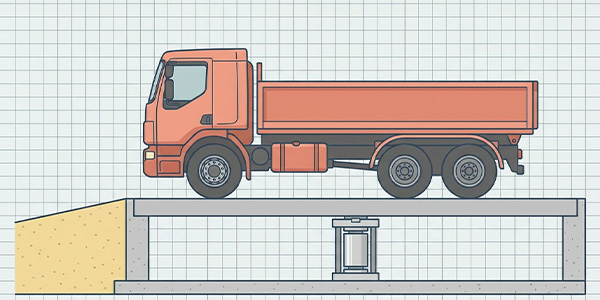
One of the most advanced implementations of AI‑powered weighing is the unmanned truck scale (weighbridge). Here’s how the three game‑changers combine:
🏭 System Architecture
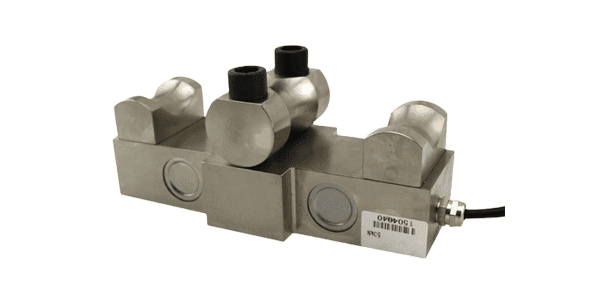
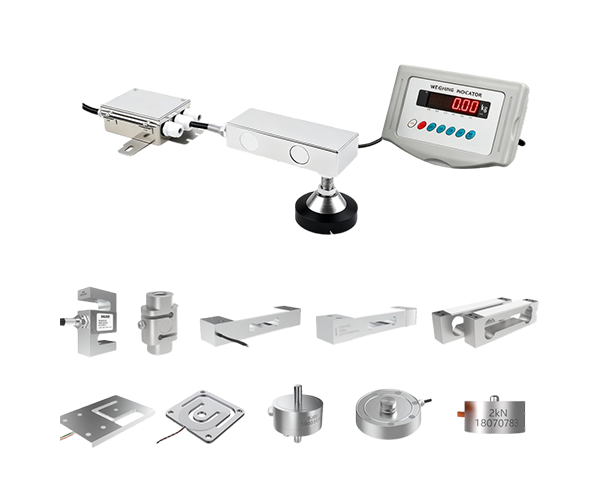
Hardware: 4x digital weighing modules (50 t each) with embedded AI processor, plus cameras, RFID reader, and traffic lights.
Connectivity: 5G modem for cloud communication; edge device for local control.
AI dynamic calibration: Compensates for temperature drift and vibration from nearby traffic, maintaining ±0.2% accuracy even with 100+ trucks/day.
Dual‑factor authentication: RFID (driver ID) + automatic license plate recognition (ANPR) ensures the correct vehicle is weighed.
Anti‑fraud measures: AI detects attempts to “creep” (partial weighing) or tamper with the scale by comparing weight history and vehicle signatures.
Edge optimization: The edge device processes weight, validates credentials, and controls barriers in real time (< 100 ms).
Cloud integration: Weight data is synced to ERP for invoicing; predictive maintenance alerts sent to service team.
Metric
Traditional Manned Weighbridge
AI Unmanned System
Processing time per truck
45–60 seconds
12–15 seconds (weigh‑while‑passing)
Operational hours
8–12 hours/day (operator shift)
24/7 fully automated
Weighing accuracy
±0.5% (depends on operator skill)
±0.2% (AI compensated)
Fraud incidents per year
15–20 (unreported)
0 (detection and alerts)
Maintenance downtime
~5% (reactive repairs)
<1% (predictive)
💡 ROI Highlight: One logistics hub reported a full return on investment in 11 months after deploying an AI unmanned truck scale system, thanks to reduced labor costs, eliminated fraud, and 300% throughput increase during peak hours.
7. The Intelligent Weighing Roadmap
For organizations planning their smart weighing journey, here is a phased approach:
Phase 1 (2025–2026): Replace legacy analog modules with digital smart modules (IoT‑ready, edge‑capable). Begin collecting health and environmental data.
Phase 2 (2026–2027): Implement AI dynamic calibration on critical applications (checkweighers, truck scales). Train models using historical data.
Phase 3 (2027–2028): Deploy predictive maintenance across the entire weighing fleet. Integrate with CMMS (Computerized Maintenance Management System).
Phase 4 (2028+): Full autonomy – unmanned operation, self‑calibration, and integration with autonomous vehicles and robotic process automation.
🔮 Future Horizon: By 2030, we expect “zero‑touch” weighing systems where AI handles everything from error compensation to fraud detection to service scheduling, with human intervention required only for hardware replacement.
8. Conclusion: Embrace the Intelligence Revolution
The transition from passive weighing modules to intelligent data nodes is not a luxury – it is a competitive necessity. AI dynamic calibration delivers sustained accuracy in harsh environments. Edge computing + 5G enables weigh‑while‑passing throughput that traditional systems cannot match. IoT predictive maintenance turns unplanned downtime into scheduled, predictable events. And as the unmanned truck scale example shows, these technologies work together to create systems that are faster, more accurate, and virtually fraud‑proof.
At Galoce, we are already shipping AI‑ready weighing modules with onboard processing, 5G connectivity, and predictive analytics capabilities. Whether you are upgrading a single checkweigher or building a fully autonomous weighbridge network, our team can guide you through the intelligent weighing roadmap.
IP65, IP67 and IP68 are not levels on one scale. See the real IEC 60529 test conditions and learn which rating your humid, dusty or corrosive site needs.
Discover why GALOCE is the leading load cell manufacturer in China. Offering high-precision force sensors, 26-step quality audits, and global OEM/ODM engineering for US & UK industrial standards. Explore our brand guide.